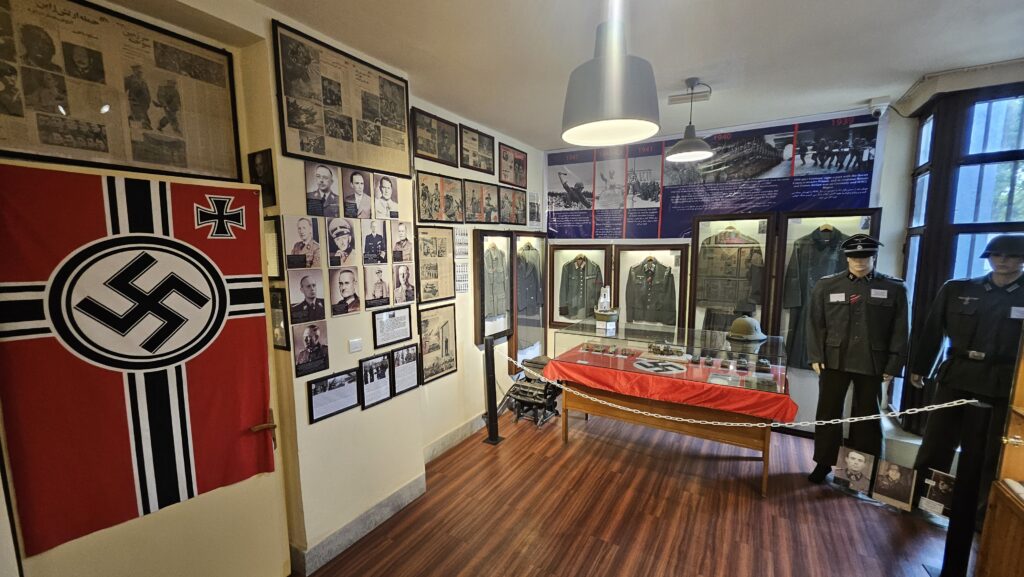
The Axis Room of the museum offers a comprehensive glimpse into the history of Nazi Germany and its role in World War II. The rise of Adolf Hitler to power in Germany during the 1930s marked a pivotal moment in history. Hitler’s ascent was fueled by a combination of economic turmoil, political instability, and widespread discontent. His National Socialist German Workers’ Party, or Nazi Party, capitalized on these conditions, promising to restore Germany’s former glory and pursue an aggressive expansionist agenda.
As tensions in Europe escalated, Hitler’s ambitions became increasingly evident. In 1939, Germany’s invasion of Poland sparked the outbreak of World War II. This aggressive move violated international treaties and plunged Europe into a devastating conflict. The Axis powers, comprising Germany, Italy, and later Japan, sought to dominate vast territories and impose their totalitarian ideologies on conquered nations.
From 1939 to 1941, Germany engaged in a series of notable battles and campaigns across Europe. The Blitzkrieg tactics employed by the German military proved highly effective, allowing rapid advances and overwhelming enemy defenses. Key campaigns during this period included the invasion of France in 1940, culminating in the fall of Paris and the establishment of the Vichy regime. The Battle of Britain witnessed intense aerial combat as Germany attempted to subdue the Royal Air Force and pave the way for a cross-channel invasion.
In Eastern Europe, Germany’s invasion of the Soviet Union in 1941 marked a significant turning point in the war. Operation Barbarossa, as it was known, aimed to secure vital resources and eliminate the Soviet threat. Despite initial successes, the campaign ultimately bogged down in the harsh conditions of the Eastern Front, foreshadowing the grueling battles to come.
The Axis Room provides a comprehensive overview of these pivotal events, shedding light on the motivations, strategies, and consequences of Germany’s actions during this tumultuous period in history. Through artifacts, documents, and multimedia exhibits, visitors gain insight into the complexities of World War II and the enduring legacy of the Axis powers.
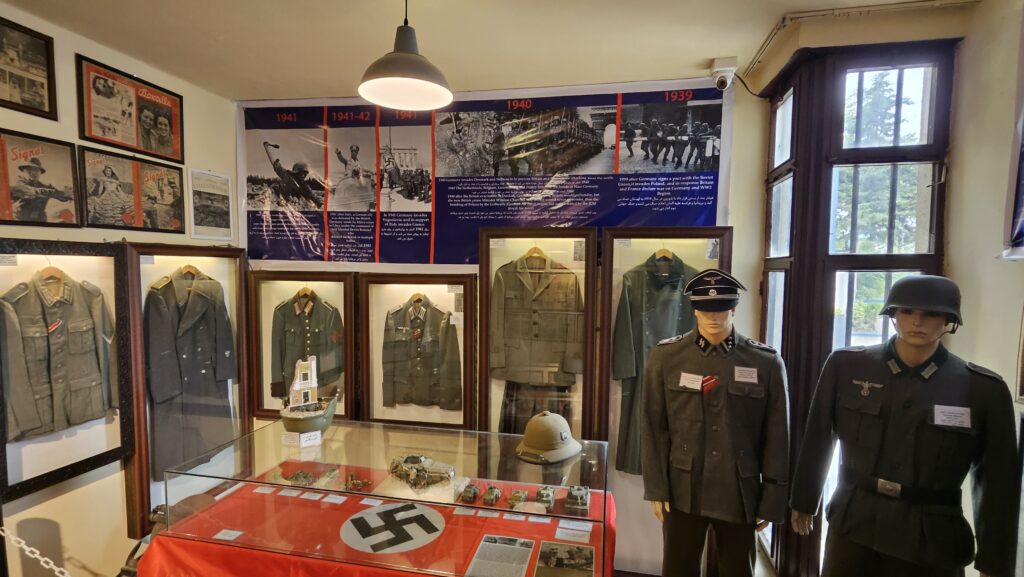
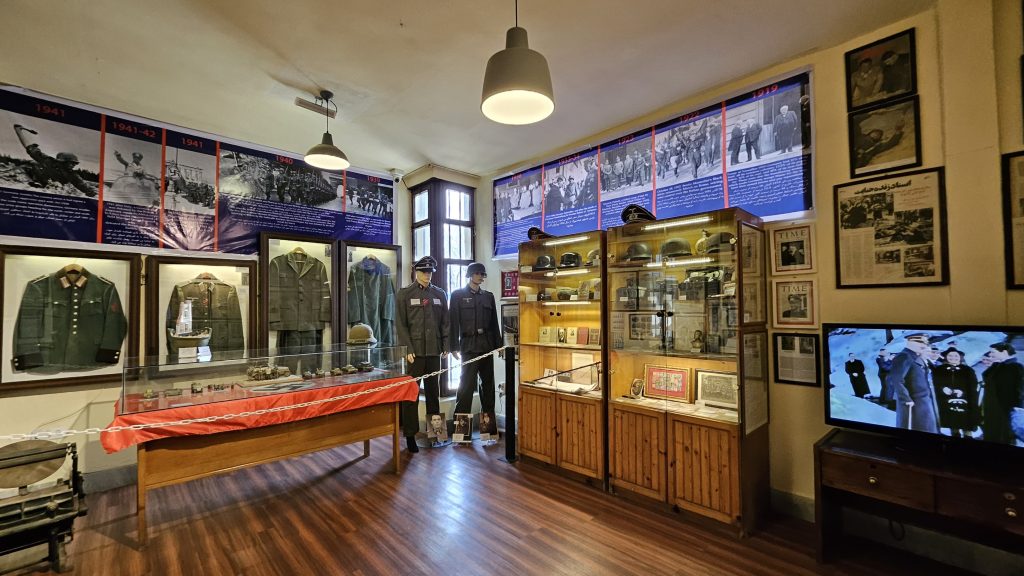
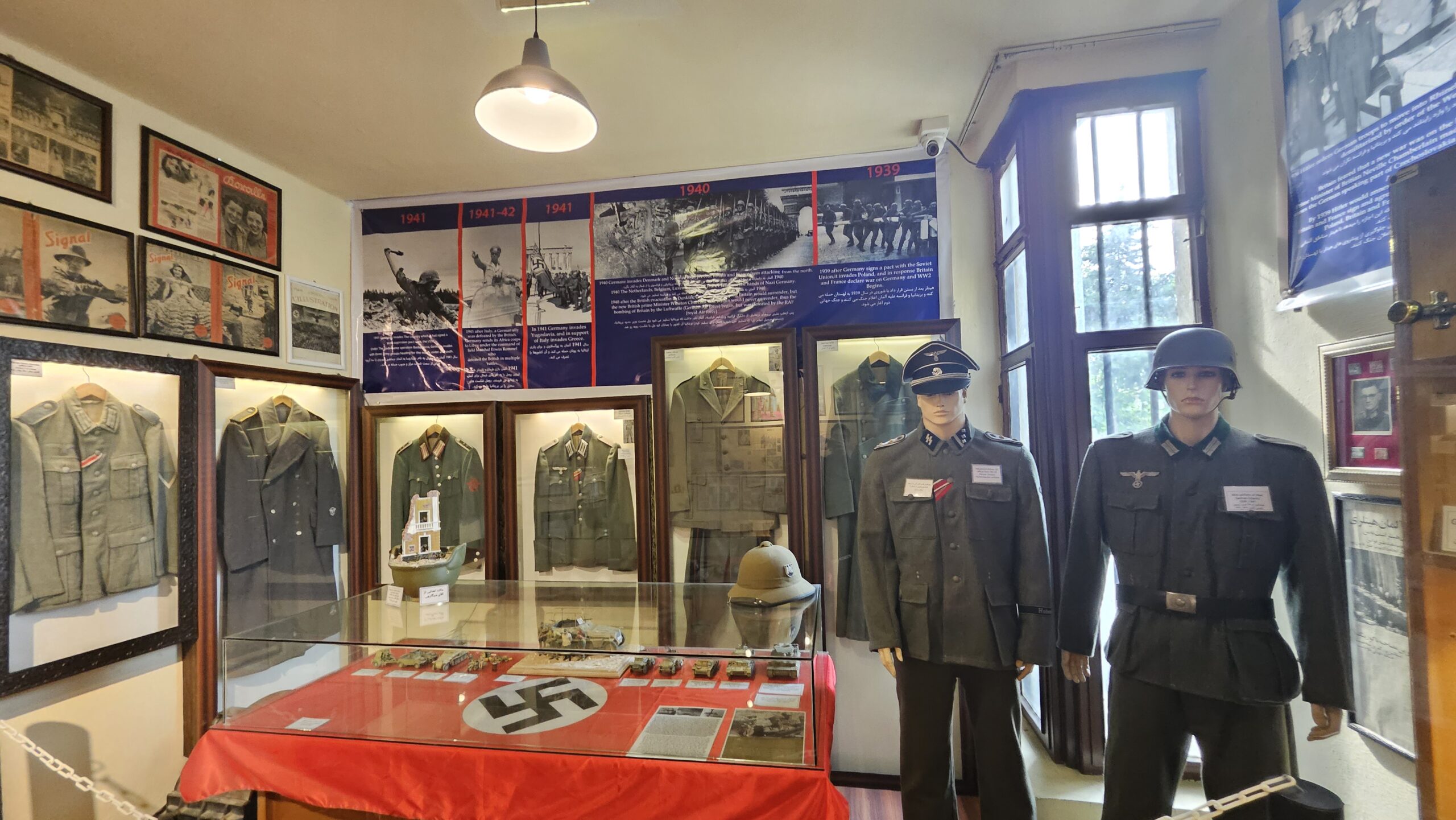
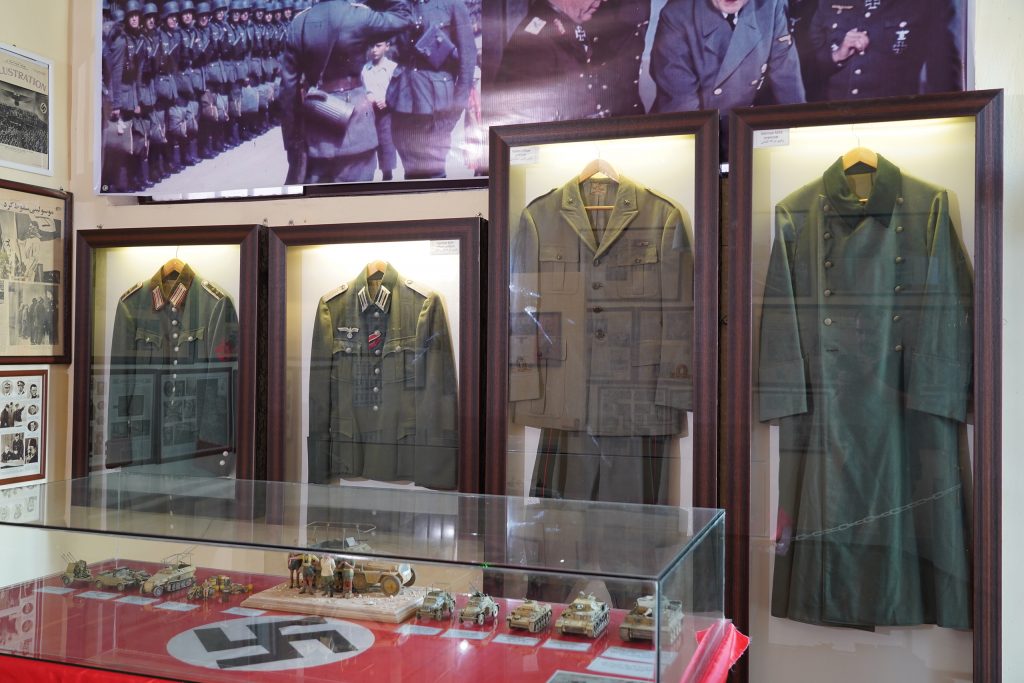
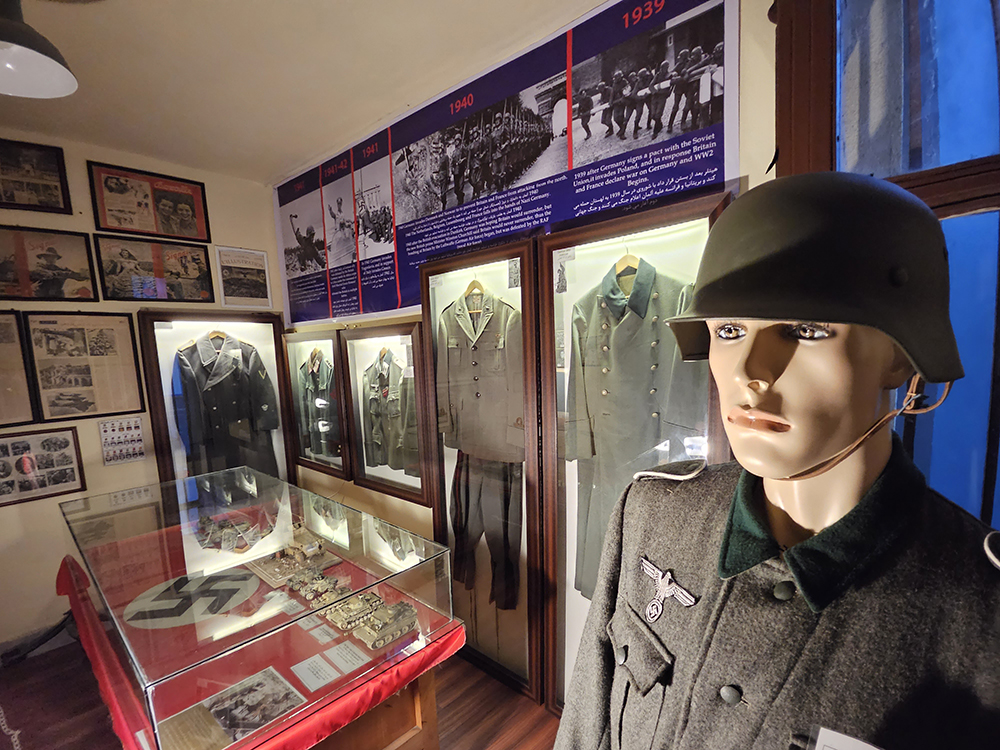
WWII-era German and Italian uniforms used from all on display in frames that show the details of the uniform clearly.
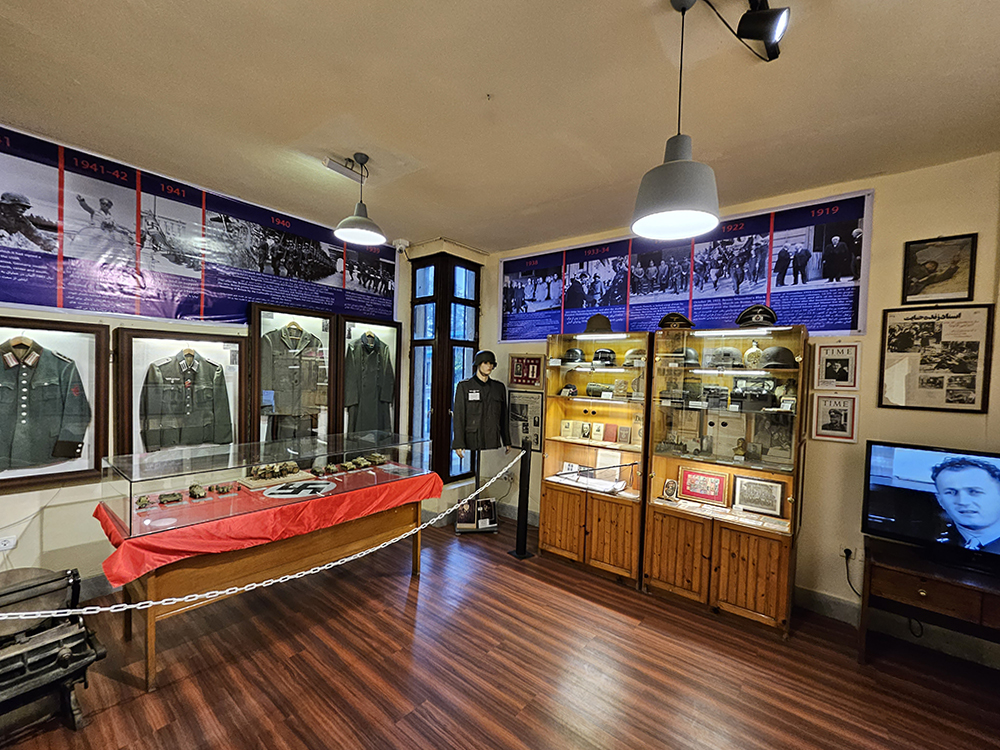
Photos and newspapers from Nazi officials and their war crimes along with a newspaper display of all the events from 1919 to 1939 that led to WW2 to the battles and campaigns of 1939 to 1941.
Axis uniforms from WWII
Alongside the items footage of wartime Europe is on display with a Television along with explanations for visitors.
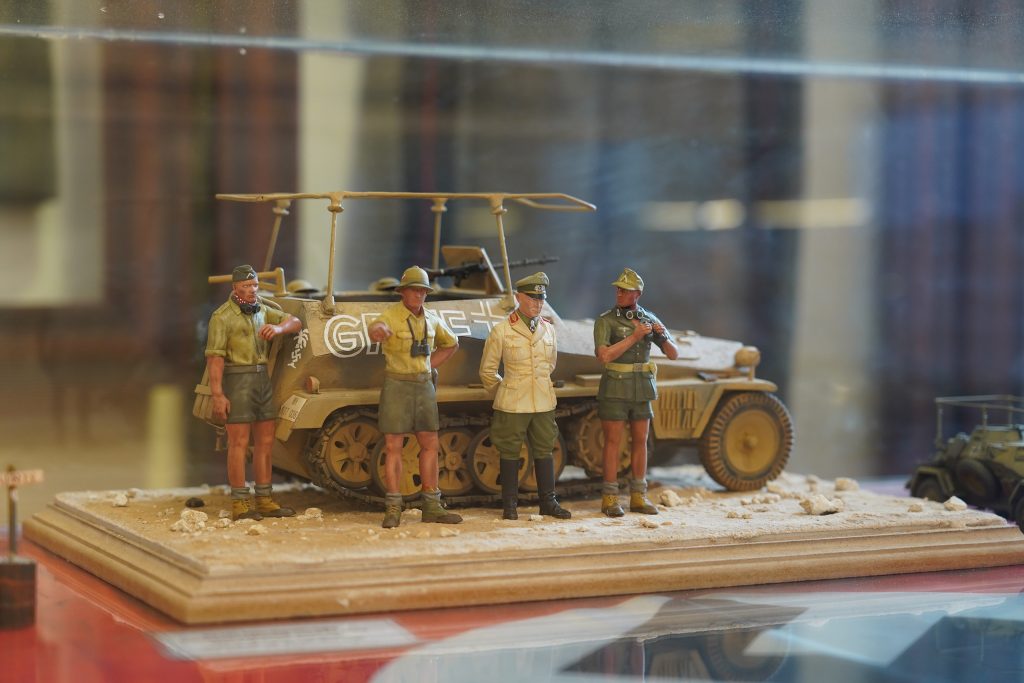
Figures from Rommel’s Afrika Korps including tanks, Half-tracks, and vehicles from the North African campaign of WW2.
Documents, ID cards, books, and papers from German soldiers and citizens living during the Nazi era.