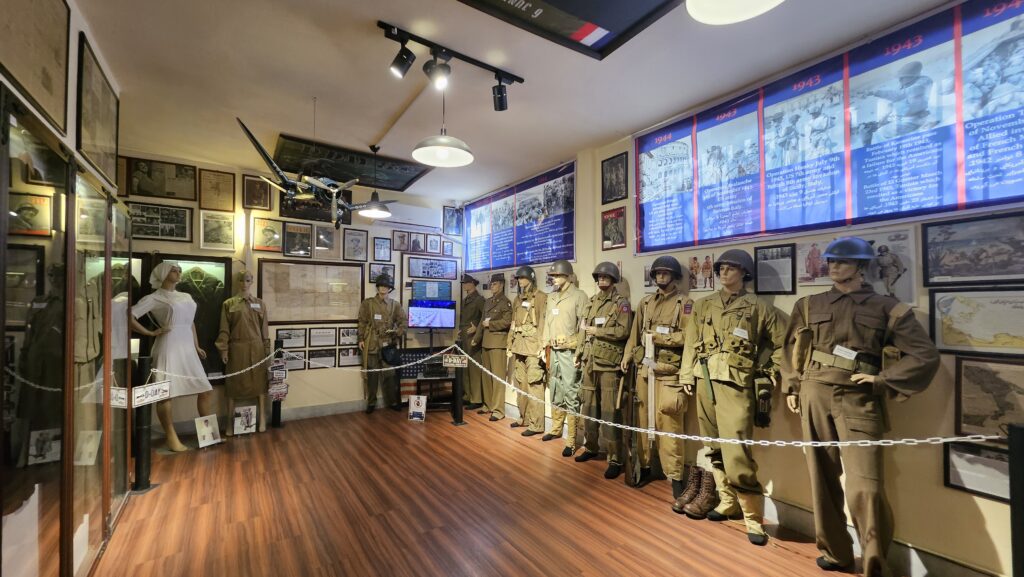
The Western Front was a military theatre of World War II in which nations such as The US, Great Britain, Commonwealth nations, France, Belgium, The Netherlands, and Germany were involved, This room also focuses on the Italian campaign and the Mediterranean theatre of WWII.
The Western Allied room showcases a brief history of the Western Allies and shows the turning point of WW2, it shows Allied victories in North Africa and Sicily in 1943 to the Western front and the Battle of Normandy in June 1944, and various other battles and Operations such as Market Garden in the Netherlands and the Battle of the Bulge.
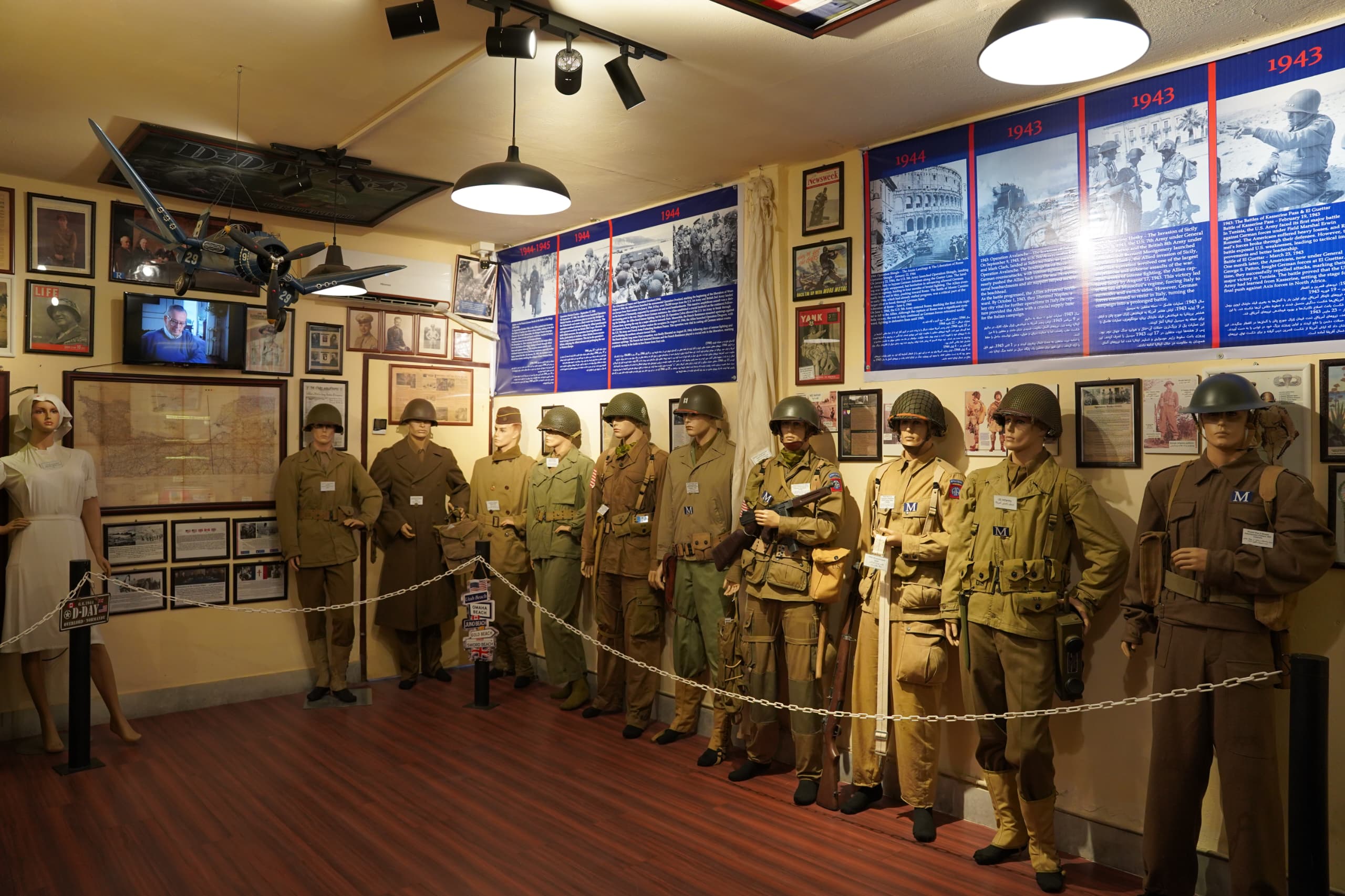
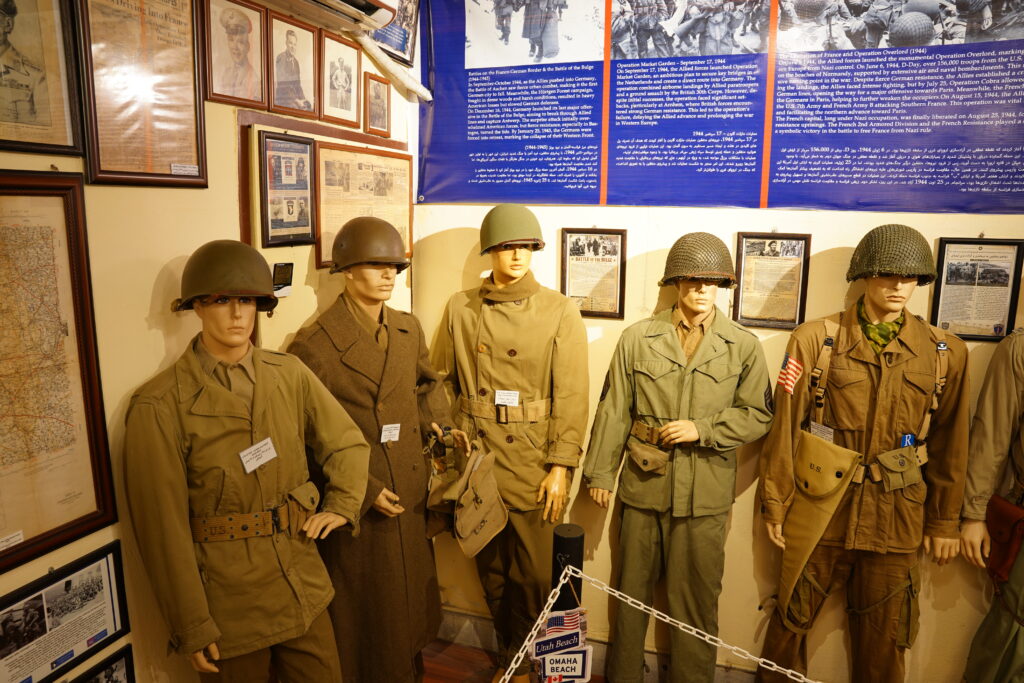
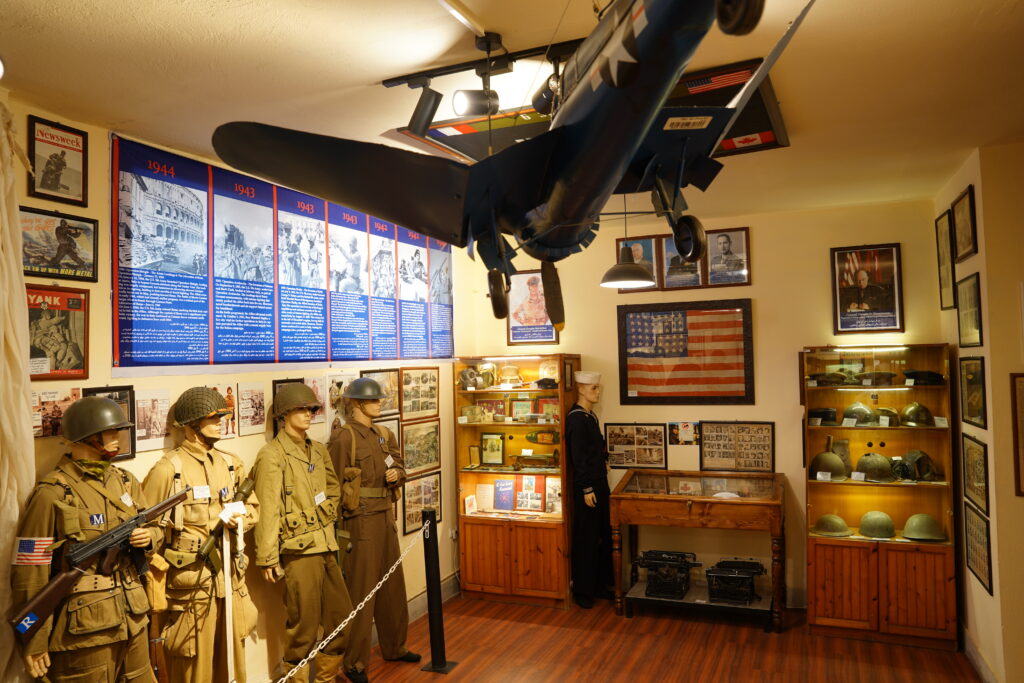
This room is filled with American, British, and French uniforms showcased alongside helmets, military equipment, and other items.
American and British uniforms from 1940 to 1945
The Western Allied Room focuses on three main campaigns of WWII, The North African Campaigns, The Italian Campaigns, and The Western European Campaigns such as The Battle of Normandy.
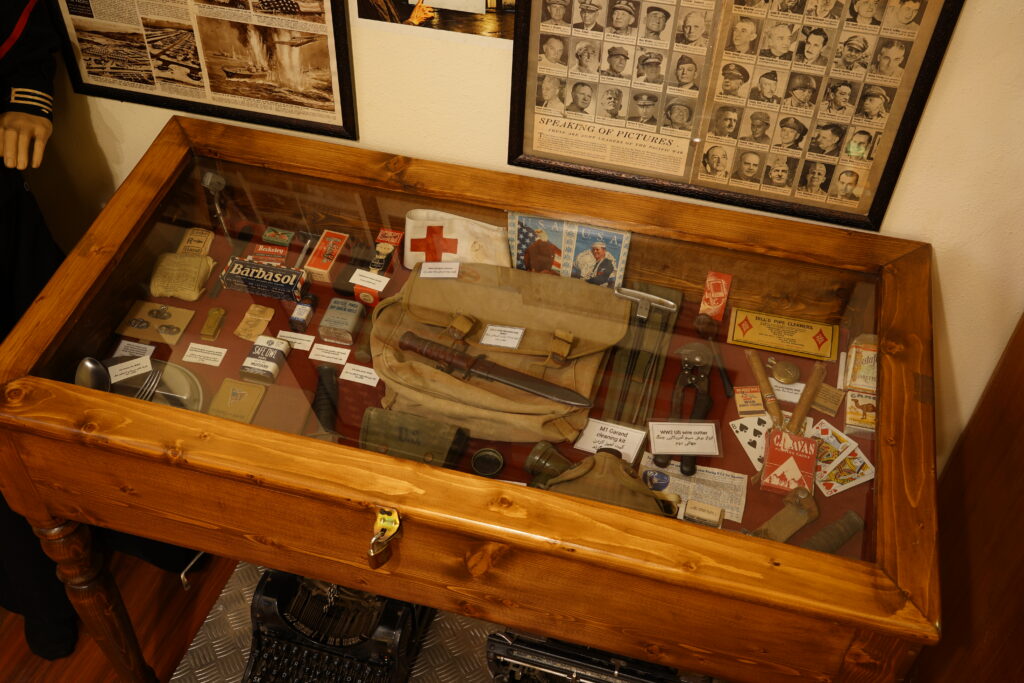
The room starts with a great display of the personal items used by the soldiers during wartime, the room then moves on to bring a simple illustration of the Mediterranean campaign WW2 from the 2nd Battle of El-Alamein and Operation Torch in Algeria and Morocco to the invasion of Sicily and operation Husky in July 1943 and Operation Avalanche in September 1943 the invasion of mainland Italy are all put on display.
The Western Front is also put into display with a lot of details, Operation Overlord The Allied invasion of Normandy, France is put into display with an original map, uniforms, and a Television that shows footage of the battle of Normandy, Operation Market Garden, The Battle of the Bulge, and the Invasion of Germany is also put on display with uniforms and news articles.
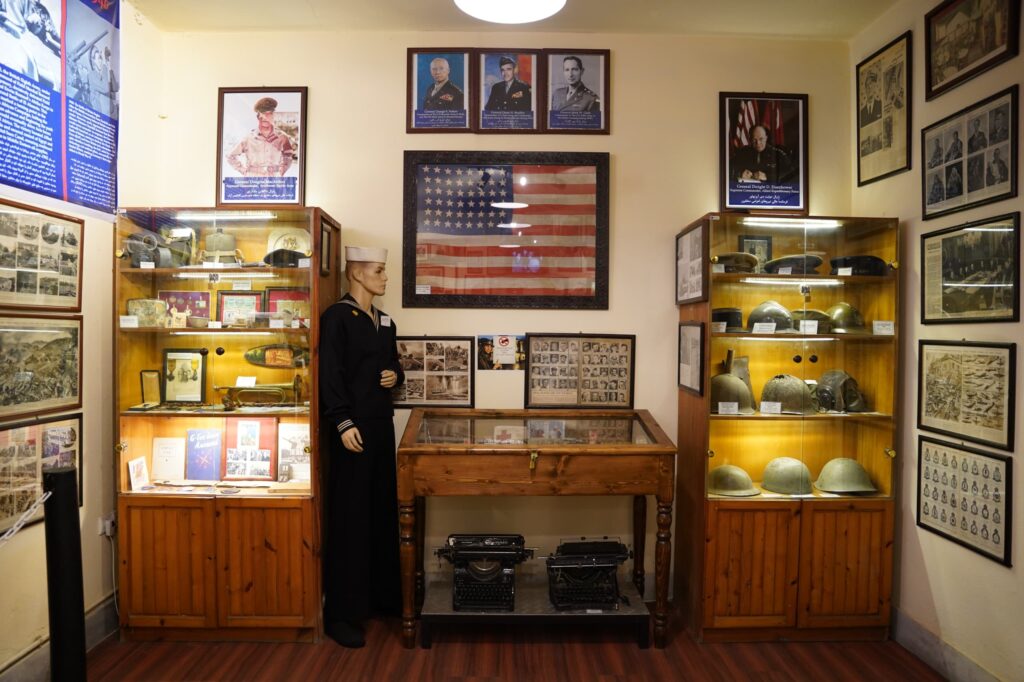
Original items from WWII used by soldiers.
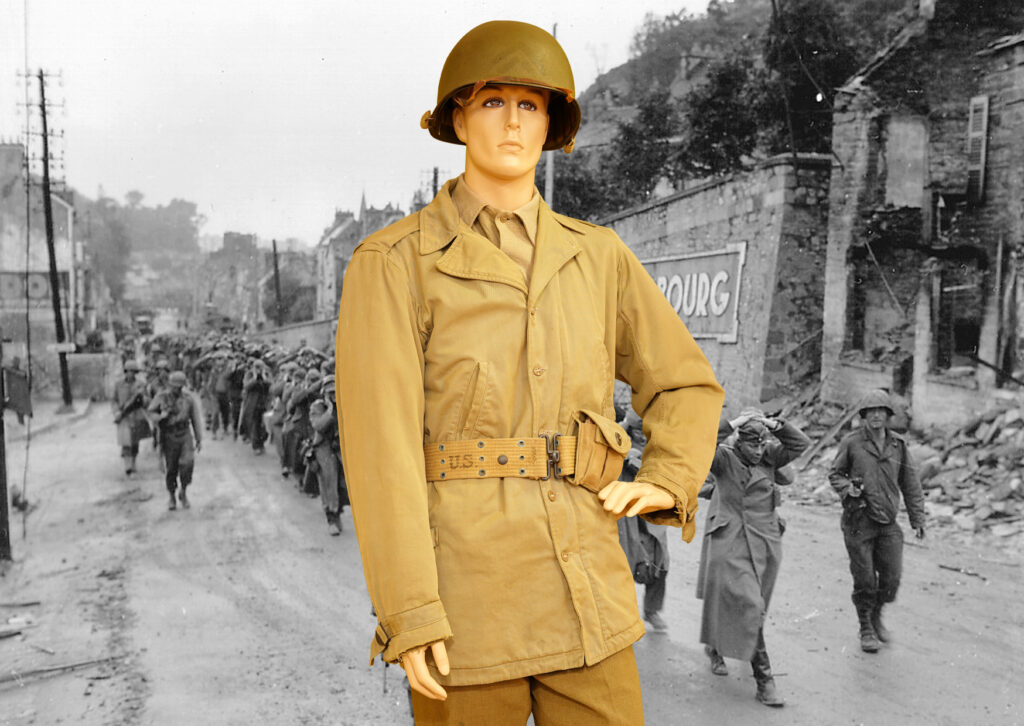
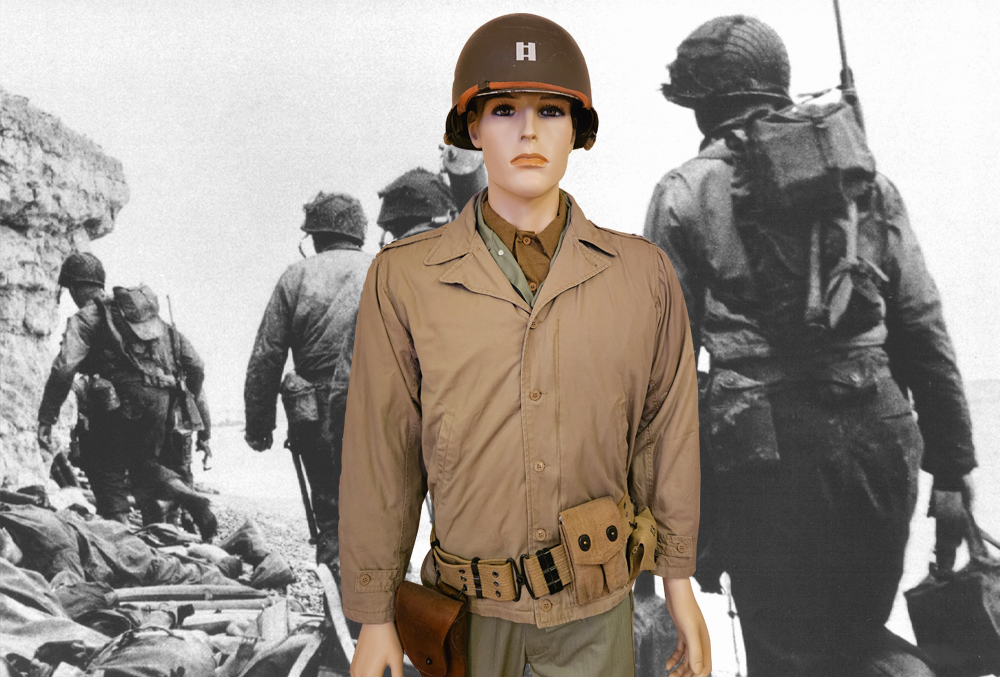
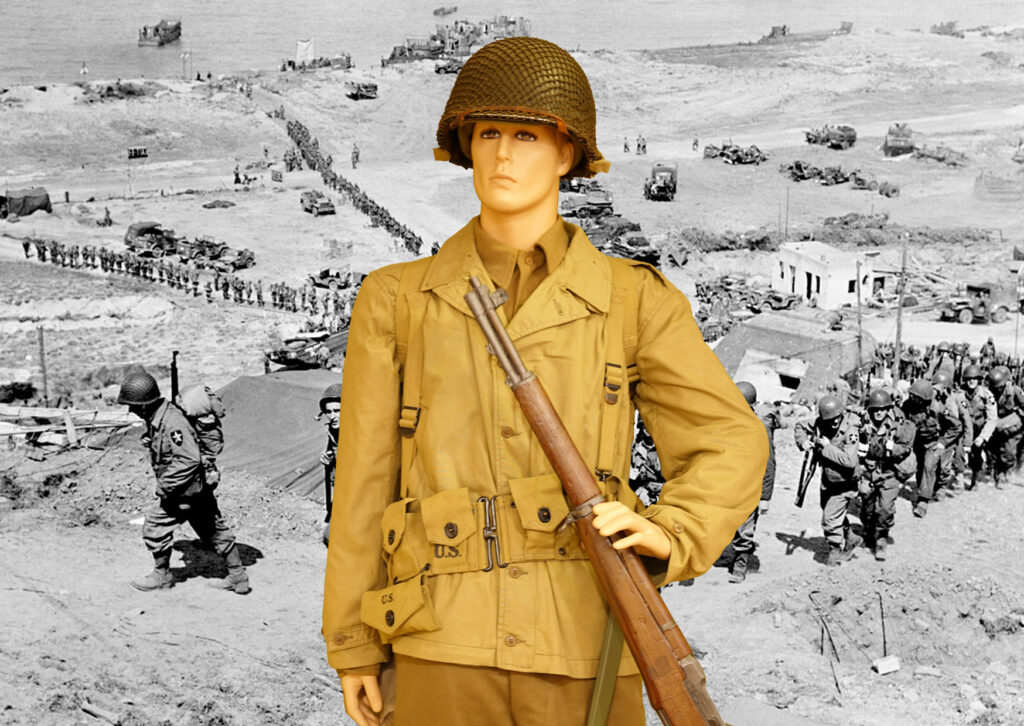
The M1941 field jacket, worn with olive-drab wool trousers, was a standard U.S. Army field uniform during the early years of American involvement in World War II. It was widely used by American soldiers in North Africa, Sicily, Italy, and the European theater, before being increasingly supplemented by newer field clothing as the war progressed.
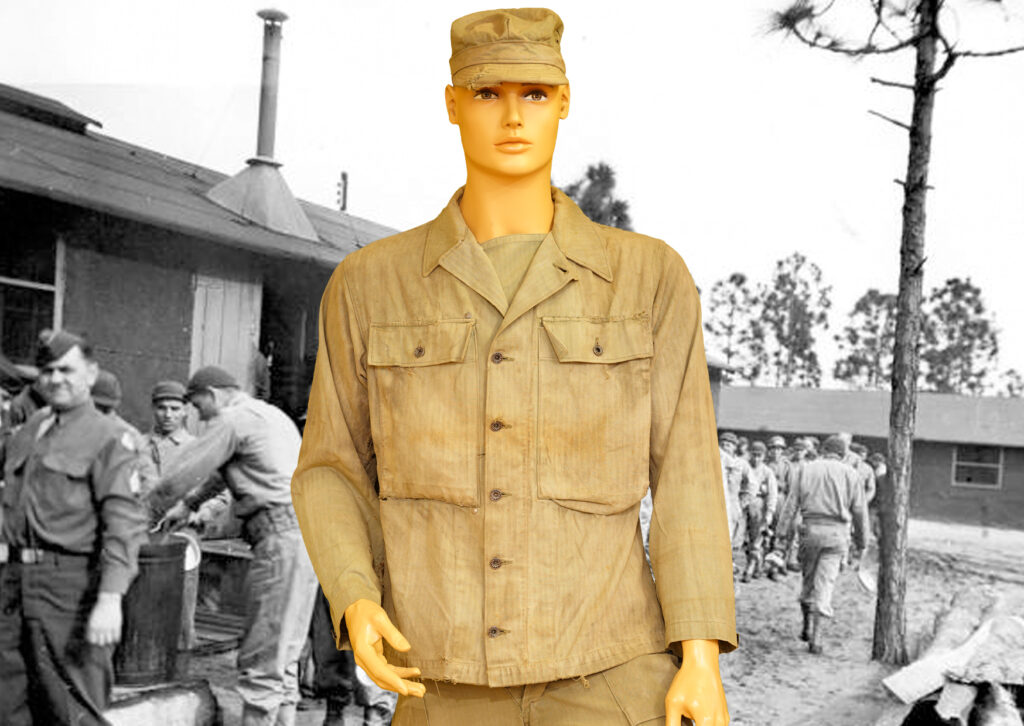
The U.S. Army’s Herringbone Twill (HBT) uniform was made from durable cotton fabric with a distinctive V-shaped weave, originally intended as a work and fatigue uniform. Its lightweight construction made it useful for training, maintenance duties, and, in some circumstances, combat, particularly in warmer climates and during the summer months.
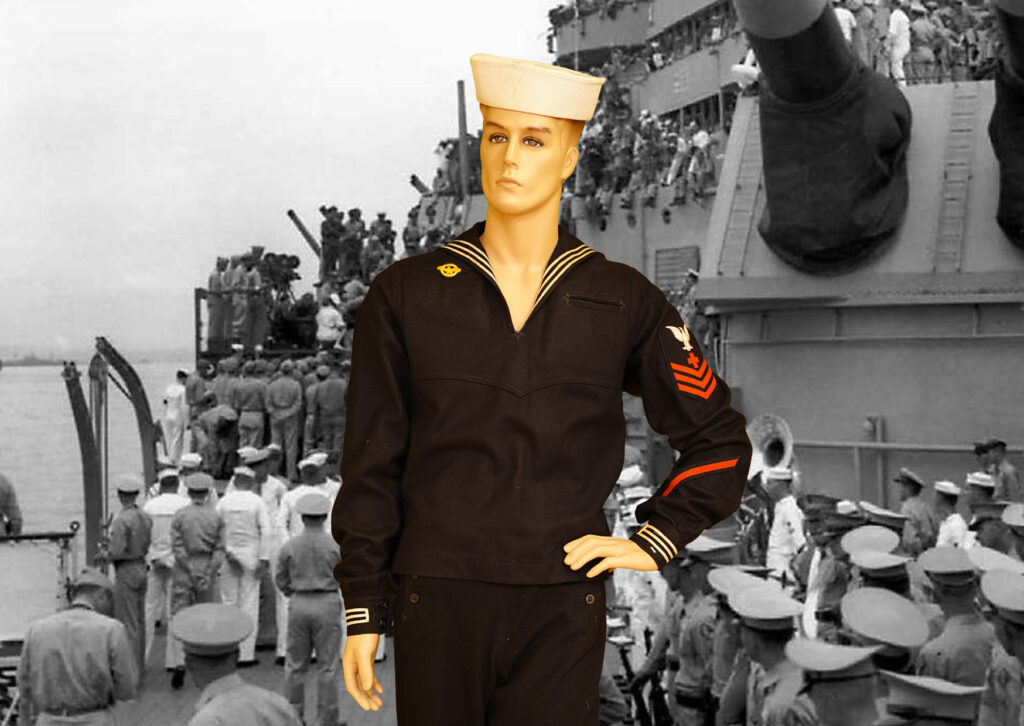
The dark-blue uniform represents the traditional dress of enlisted personnel in the United States Navy during World War II. Navy blue wool clothing was commonly worn in colder weather and for service duties, while sailors wore different working uniforms and lighter clothing depending on their assignment and the climate.
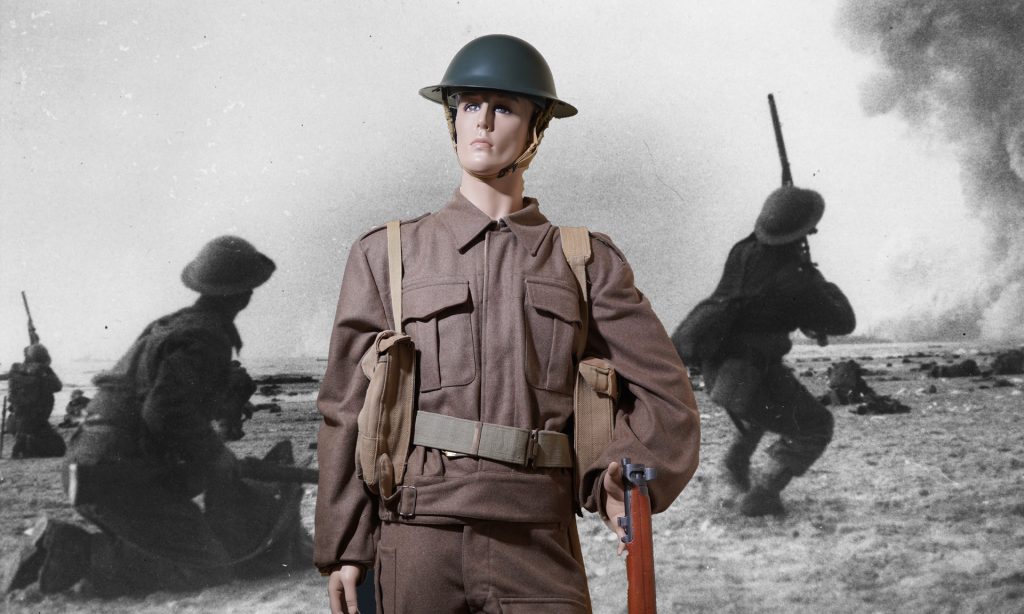
Uniforms of British and Commonwealth forces during the early years of WW2 such as the battles in Norway and France in 1940
The room starts with a great display of the personal items used by the soldiers during wartime, the room then moves on to bring a simple illustration of the Mediterranean campaign WW2 from the 2nd Battle of El-Alamein and Operation Torch in Algeria and Morocco to the invasion of Sicily and operation Husky in July 1943 and Operation Avalanche in September 1943 the invasion of mainland Italy are all put on display.
The Western Front is also put into display with a lot of details, Operation Overlord The Allied invasion of Normandy, France is put into display with an original map, uniforms, and a Television that shows footage of the battle of Normandy, Operation Market Garden, The Battle of the Bulge, and the Invasion of Germany is also put on display with uniforms and news articles.
On June 6t,h 1944, men of the US 2nd Rangers managed to secure the strategic high ground and silence a small battery of long-range German guns that had been moved inland. The battle for Pointe du Hoc became one of the most heroic moments of the D-Day
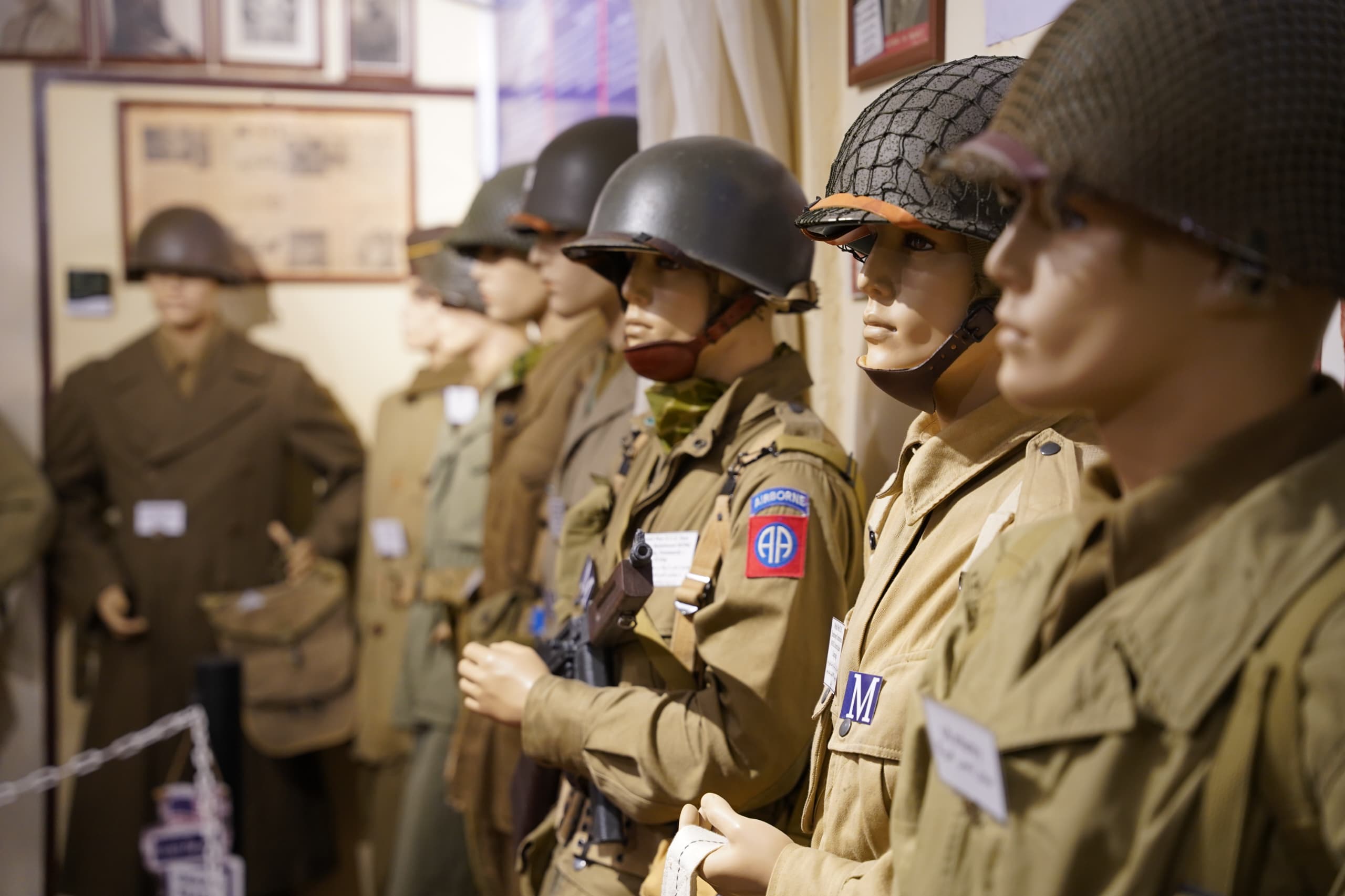
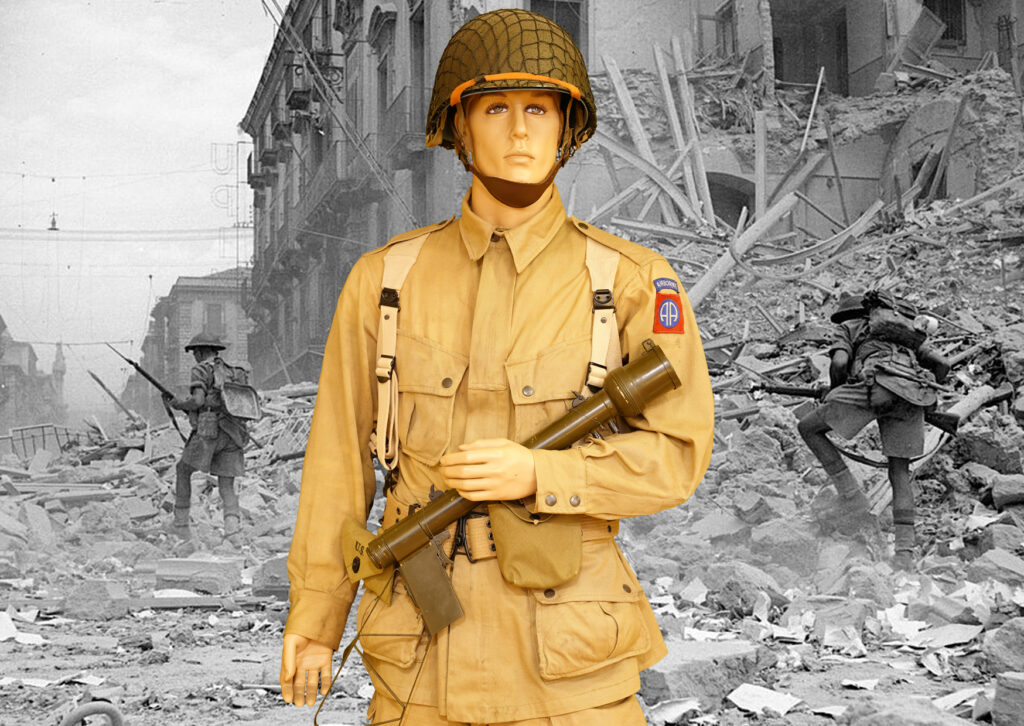
The M1942 jump uniform was designed specifically for U.S. Army paratroopers, featuring large pockets for carrying essential combat equipment and distinctive high-lacing jump boots. During Operation Husky in Sicily in July 1943, American airborne troops wore the original, unreinforced version, which proved vulnerable to tearing during combat operations.
On June 6th, 1944, American soldiers stormed the beaches of Utah and Omaha, The British taking Gold and Sword and the Canadians took Juno thus breaking the Atlantic wall and beginning the liberation of Western Europe.The room starts with a great display of the personal items used by the soldiers during wartime, the room then moves on to bring a simple illustration of the Mediterranean campaign WW2 from the 2nd Battle of El-Alamein and Operation Torch in Algeria and Morocco to the invasion of Sicily and operation Husky in July 1943 and Operation Avalanche in September 1943 the invasion of mainland Italy are all put on display.
The Western Front is also put into display with a lot of details, Operation Overlord The Allied invasion of Normandy, France is put into display with an original map, uniforms, and a Television that shows footage of the battle of Normandy, Operation Market Garden, The Battle of the Bulge, and the Invasion of Germany is also put on display with uniforms and news articles.
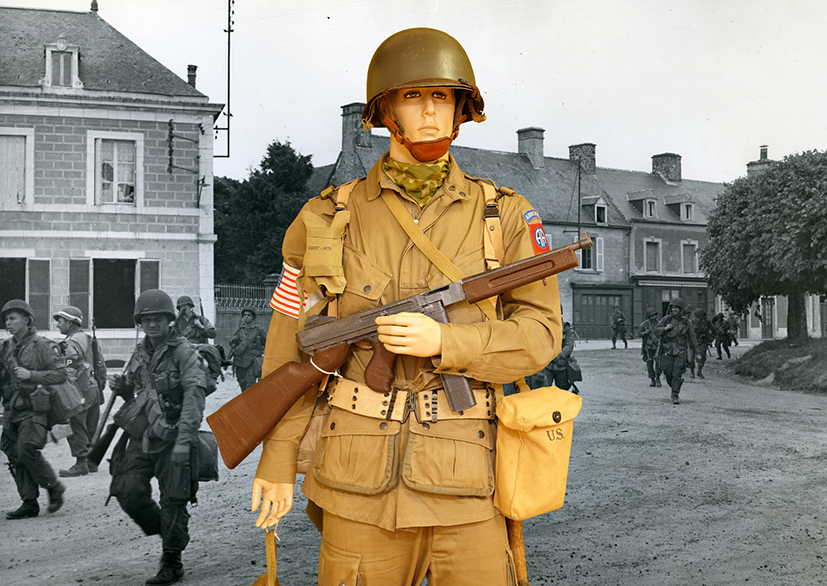
Before the Normandy landings on June 6, 1944, U.S. Army paratroopers received reinforced M1942 uniforms with additional canvas patches at high-wear areas, including the elbows, knees, and pockets. Designed to withstand the demands of airborne operations, these uniforms were worn by American paratroopers of the 82nd and 101st Airborne Divisions during the D-Day invasion.
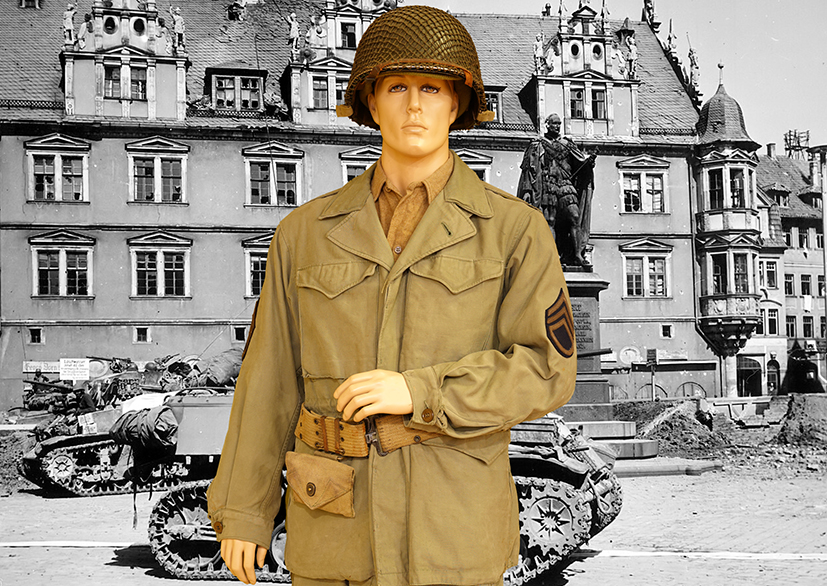
This U.S. Army Staff Sergeant represents the American soldier of the late Second World War, wearing the M1943 field uniform, introduced in 1943 to provide a practical, durable, and weather-resistant combat outfit. Its olive-drab jacket featured four spacious pockets and a detachable hood, while the U.S. Army expanded across multiple theaters of war, playing a decisive role in the Allied victories of 1944–1945.
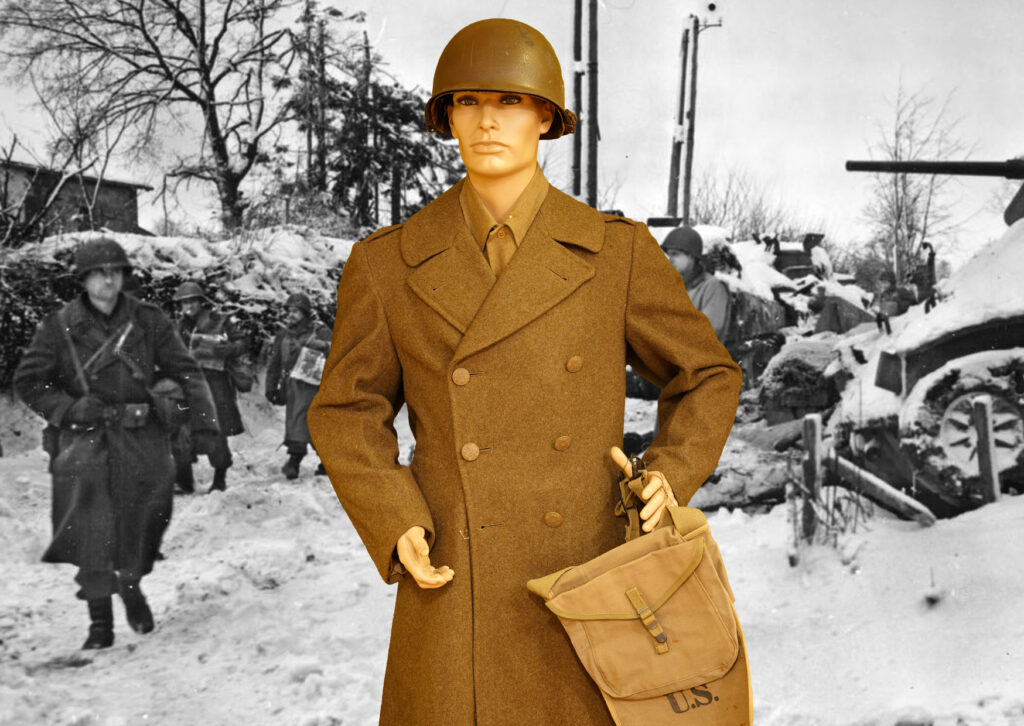
The U.S. Army Melton wool overcoat was a heavy, double-breasted olive-drab coat designed to provide warmth during cold-weather service. During the Battle of the Bulge in the winter of 1944–1945, American soldiers wore these overcoats in the freezing conditions of Belgium and Luxembourg.
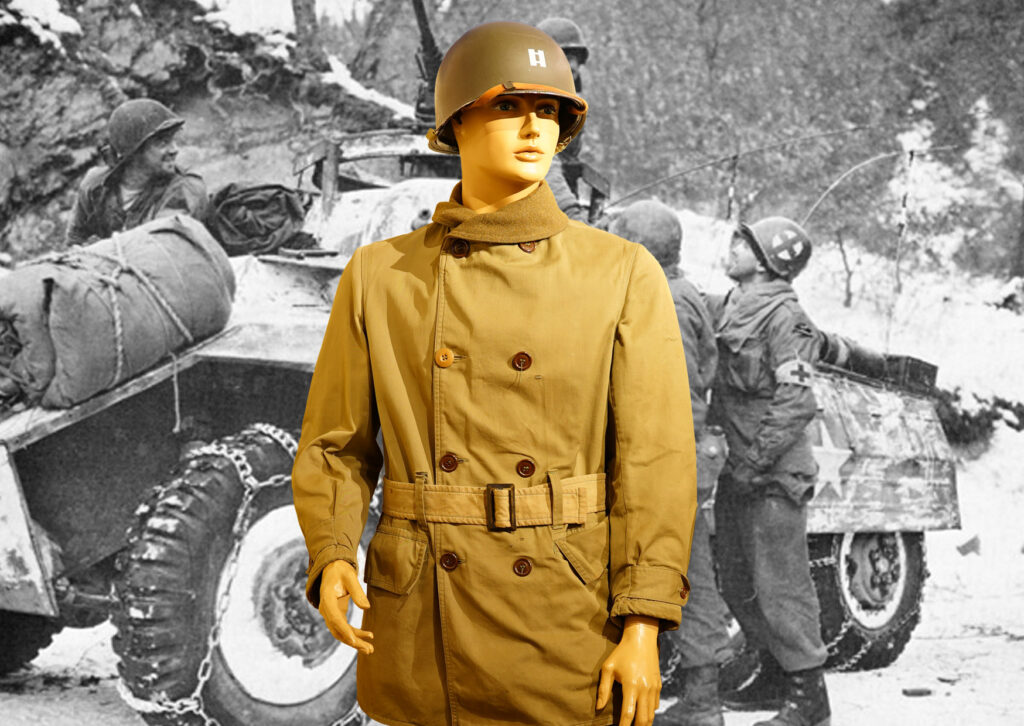
The U.S. Army Mackinaw coat was a heavy, wool-lined winter garment designed to protect soldiers from cold and wet weather. It was worn by American troops during the winter campaigns in Europe, including the Battle of the Bulge in Belgium and Luxembourg, where freezing temperatures and snow made warm outerwear essential.
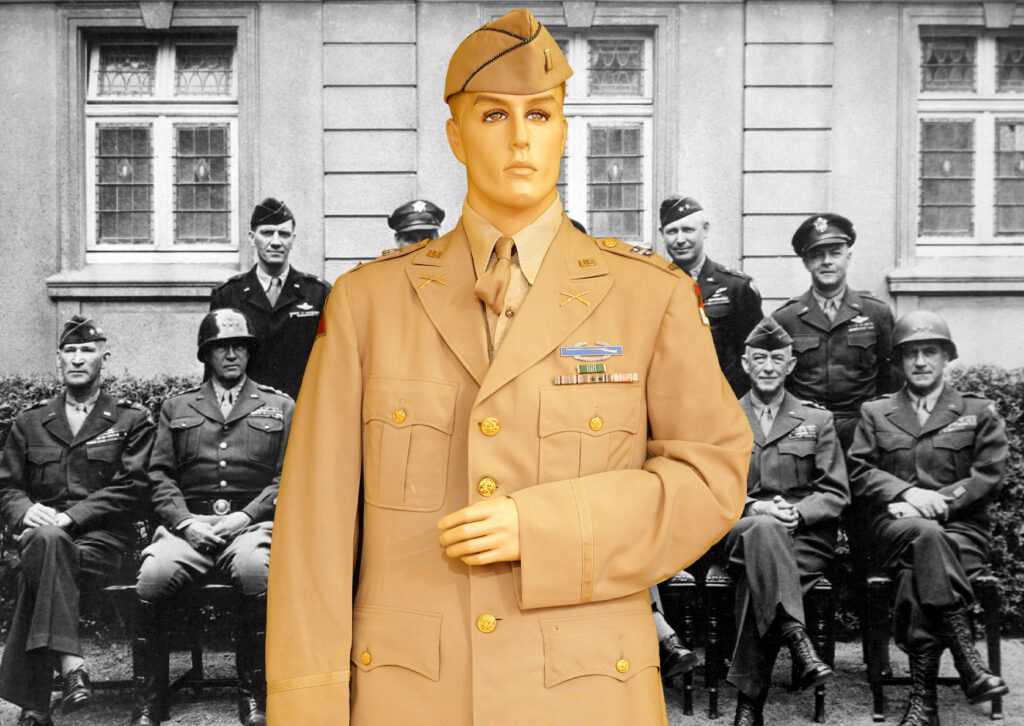
This uniform represents a U.S. Army officer wearing a khaki service shirt and coat, used primarily for warm-weather service and formal or garrison duties. Officers served in every major theater of the war, leading American forces from North Africa and Italy to the liberation of Western Europe.
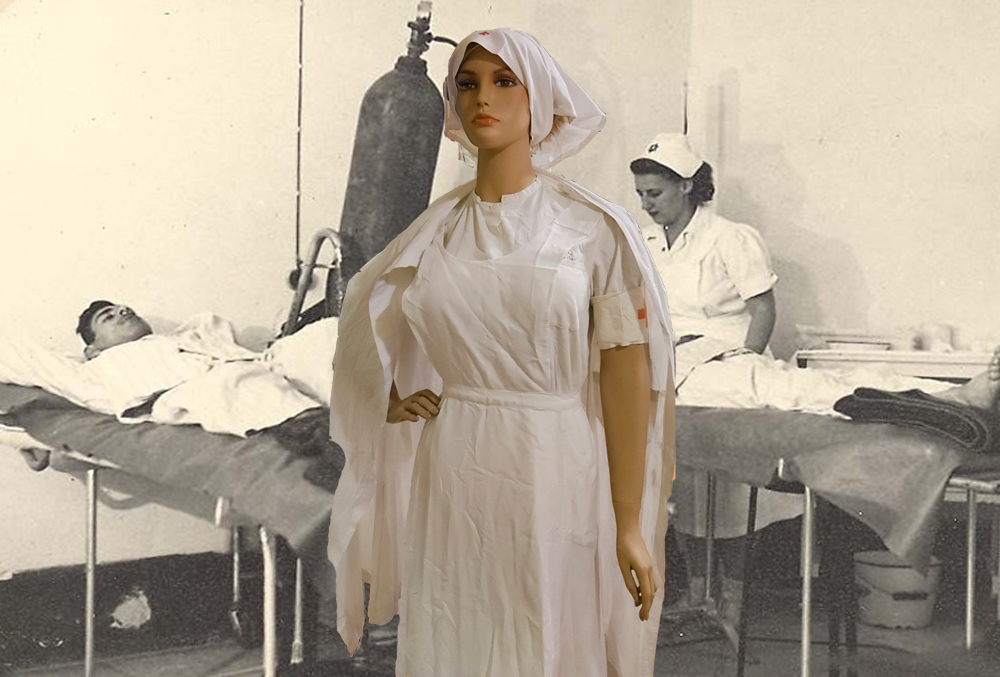
This uniform represents the clothing worn by French military nurses during the opening years of the Second World War, particularly during the Battle of France in 1940. French nurses served in military hospitals, field medical units and evacuation stations, caring for wounded soldiers during the campaign and the subsequent retreat.