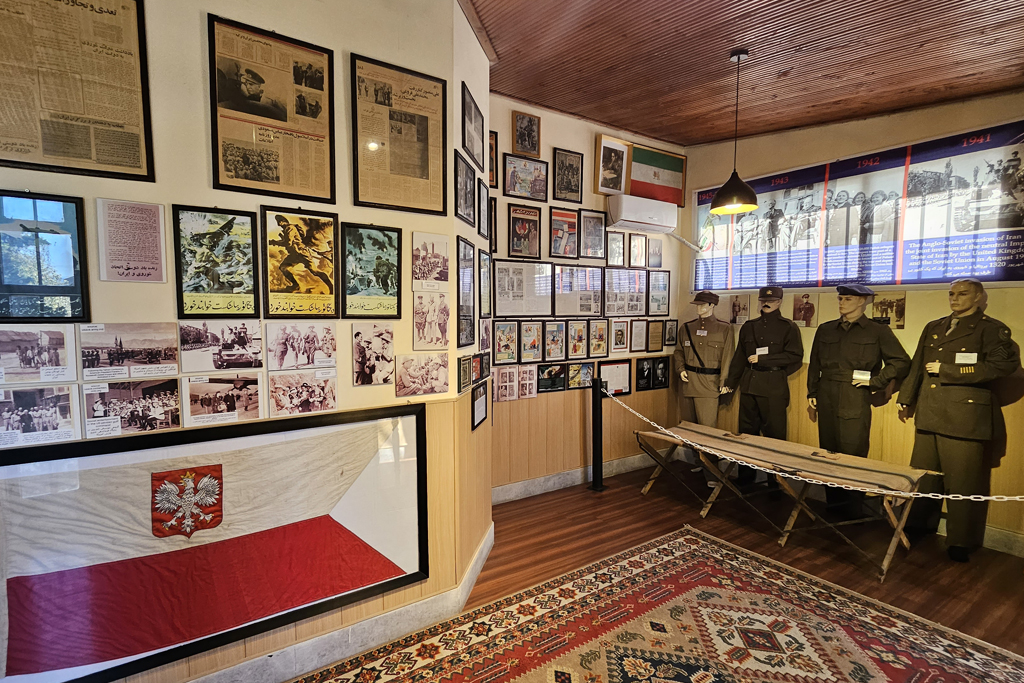
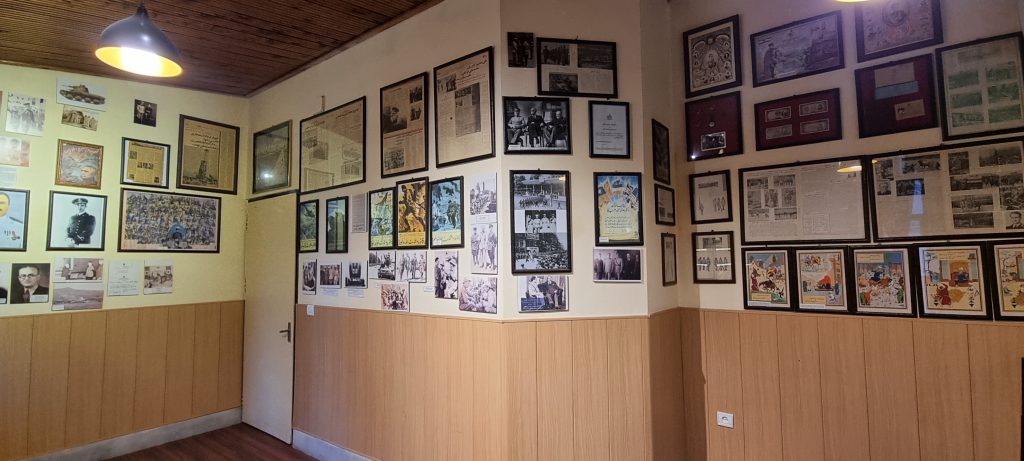
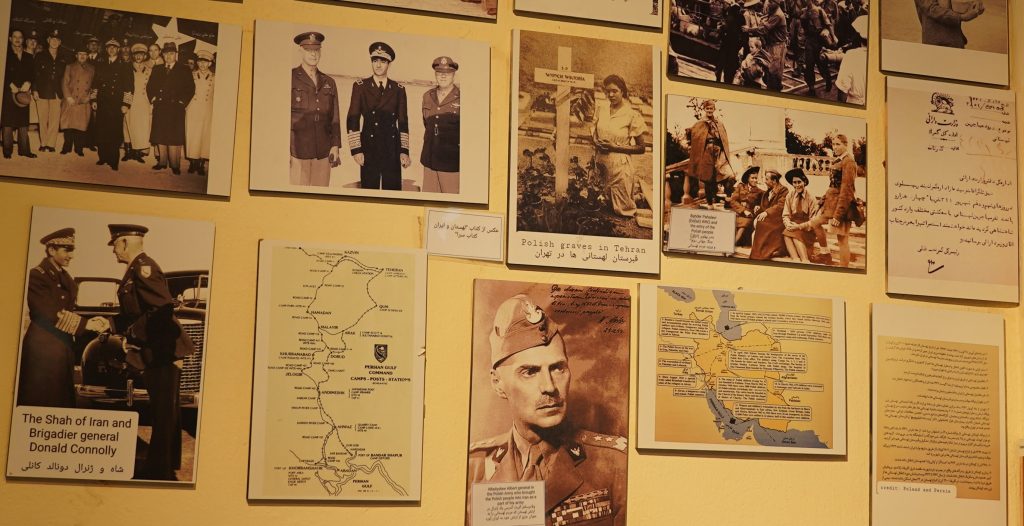
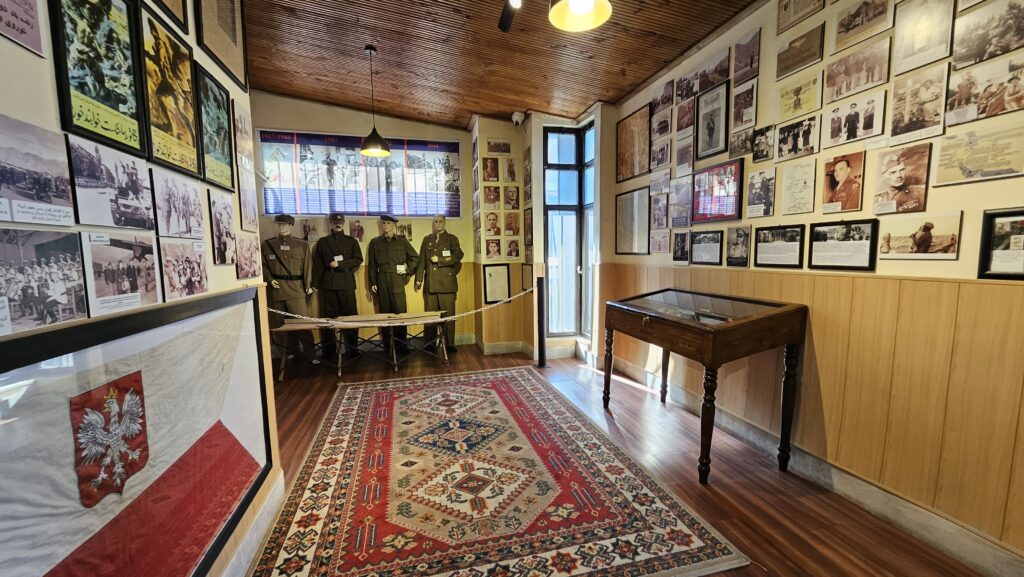
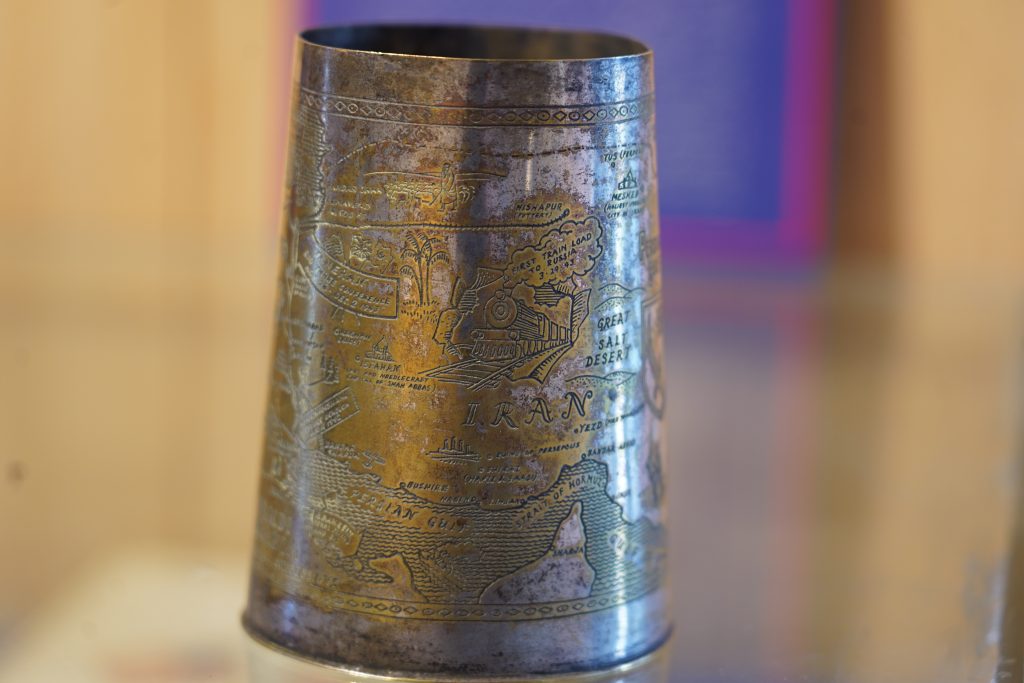
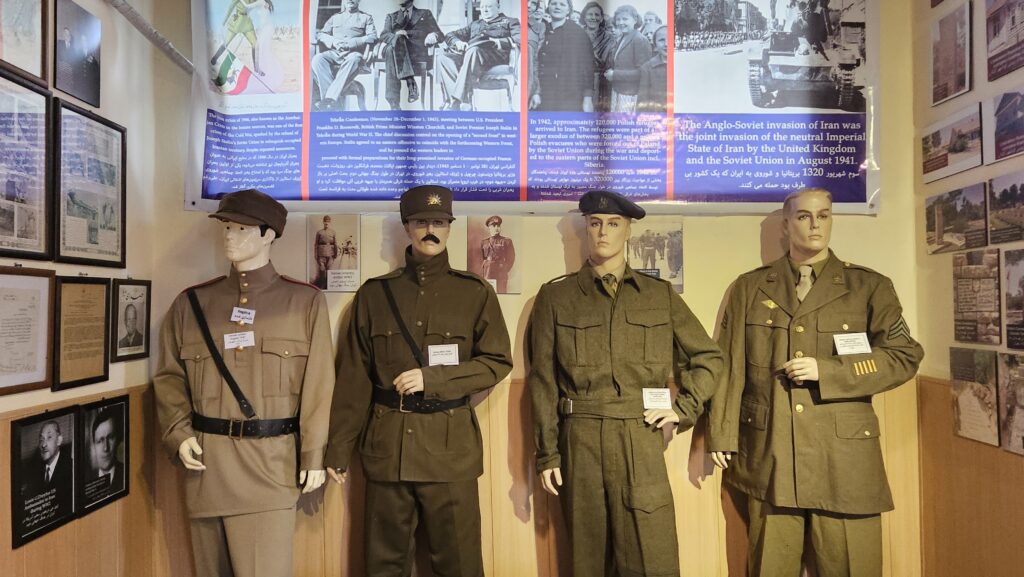
The WWII Iran room focuses on major events that took place in Iran during WWII, this room shows the Anglo-Invasion of Iran in August 1941, The Polish immigrants in Iran, The Persian gulf command of the US, Lahijan and Gilan during WW2, The Tehran conference of 1943 and various other important objects.
The Anglo-Soviet invasion of Iran was the joint invasion of the neutral Imperial State of Iran by Great Britain and the Soviet Union in August 1941.
At first, the photos will give a clear and simple description of the modern Iranian army which had been organized under the rule of Reza Shah the king of Iran to become a modern army of the time, though by the time of the Anglo-Soviet invasion of 1941 the Iranian army was not strong enough to resist the invasion.
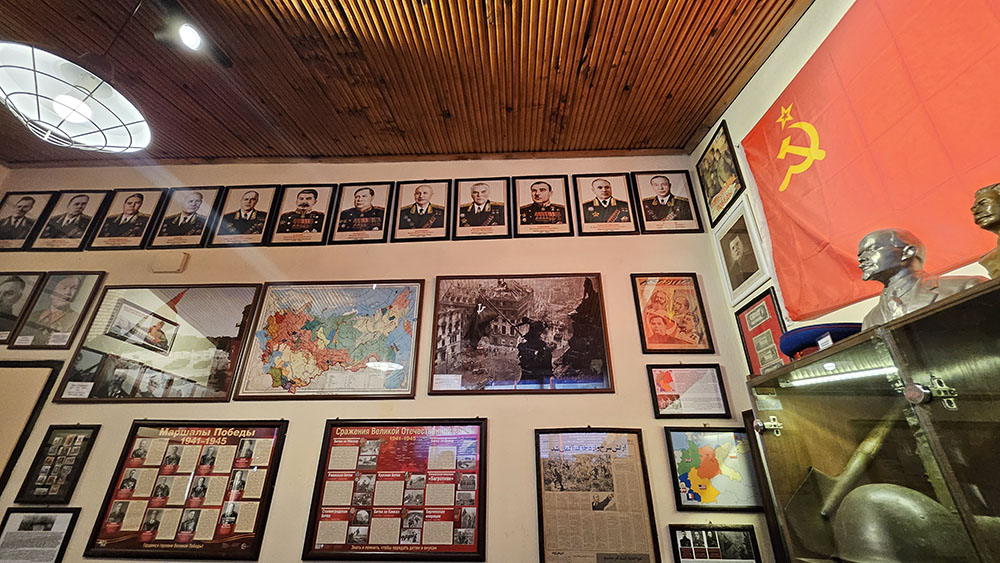
photos of Iranian, Soviet, and British commanders involved in the events of August 1941 in Iran are displayed in this section along with a summary of Nazi Germany’s presence in Iran from the 1930s to 1941.
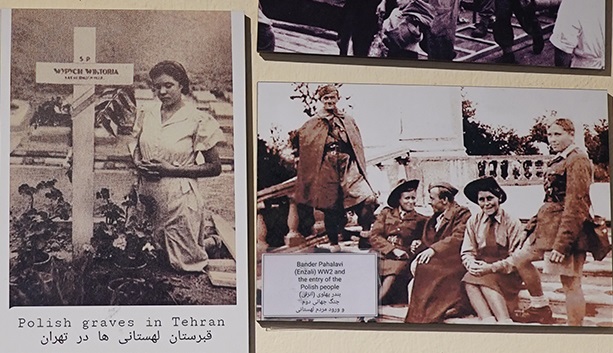
Perhaps the most iconic part of the room is the section on the 1941-1945 era events which takes a deeper look into foreigners’ presence in Iran. These include the Polish immigration to Iran in 1942 where about 150,000 Polish refugees came to Iran many of whom entered through the port of Pahlavi (now Anzali), The US army’s Persian Gulf command and their presence in Iran is also the second part of this section which tells the history of how this unit had the task of sending lend-lease aid to the Soviet Union through the Persian corridor and the final part speaks about the occupation of Gilan by the Soviet Union during WW2, this section has a display of maps and photos never put on the display anywhere else which shows the events that took part in Gilan from 1941 to 1945,
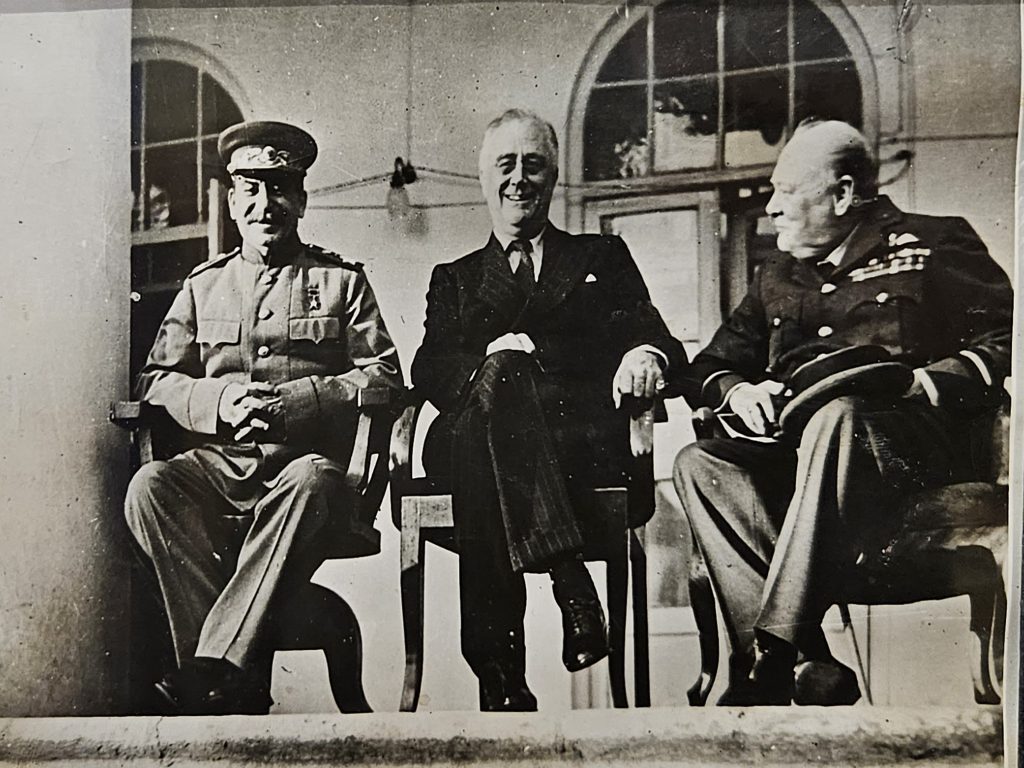
The Iranian room also focuses on the most iconic and important event that took place in the Persian capital during WWII, The Tehran conference.
The Tehran Conference was a strategy meeting of Joseph Stalin, Franklin D. Roosevelt, and Winston Churchill from 28 November to 1 December 1943, after the Anglo-Soviet invasion of Iran. It was held at the Soviet Union’s embassy at Tehran in Iran.
The Tehran Conference was the first World War II conference of the “Big Three” Allied leaders. Although the leaders arrived with differing objectives, the main outcome of the Tehran Conference was the Western Allies’ commitment to open a second front against Nazi Germany, including an invasion on France.
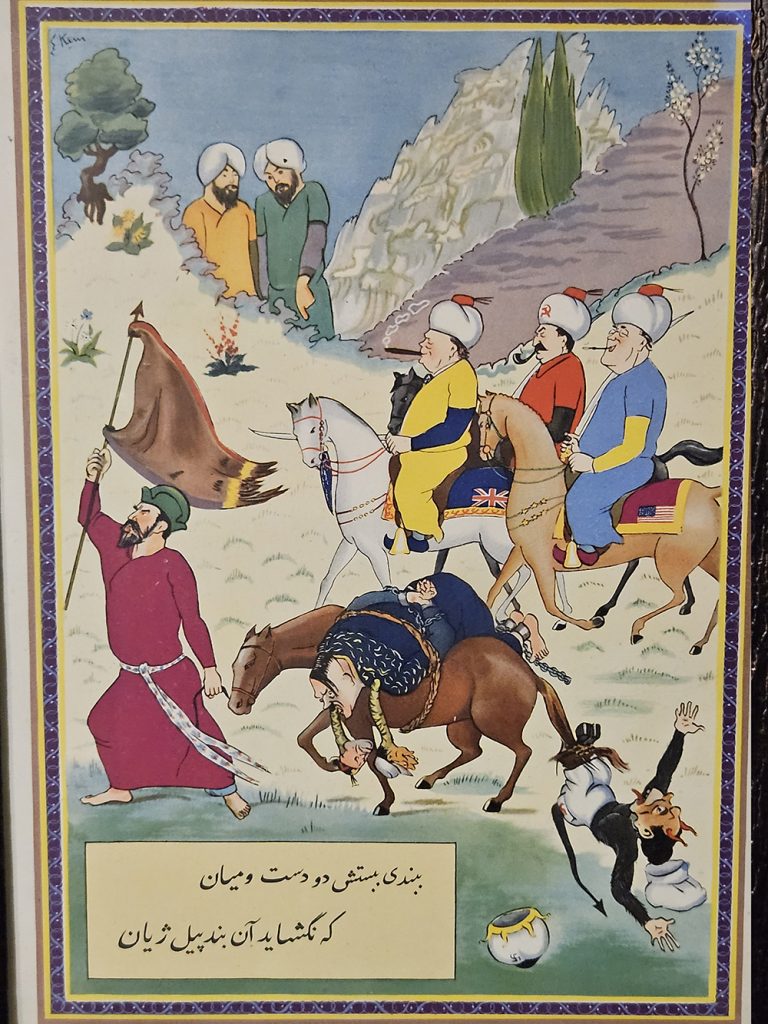
The Iranian Shahnameh was used as WW2 anti-Nazi propaganda, Hitler as Zahak (The villain), and the snakes of Zahak shown as Mussolini and Tojo, along with the hero Kaveh stands Churchill, Roosevelt, and Stalin.
Iranian soldiers training with a machine gun 1930s
The Tehran Conference was the first World War II conference of the “Big Three” Allied leaders. Although the leaders arrived with differing objectives, the main outcome of the Tehran Conference was the Western Allies’ commitment to open a second front against Nazi Germany, including an invasion on France.
Photo of two Iranian soldiers 1930s
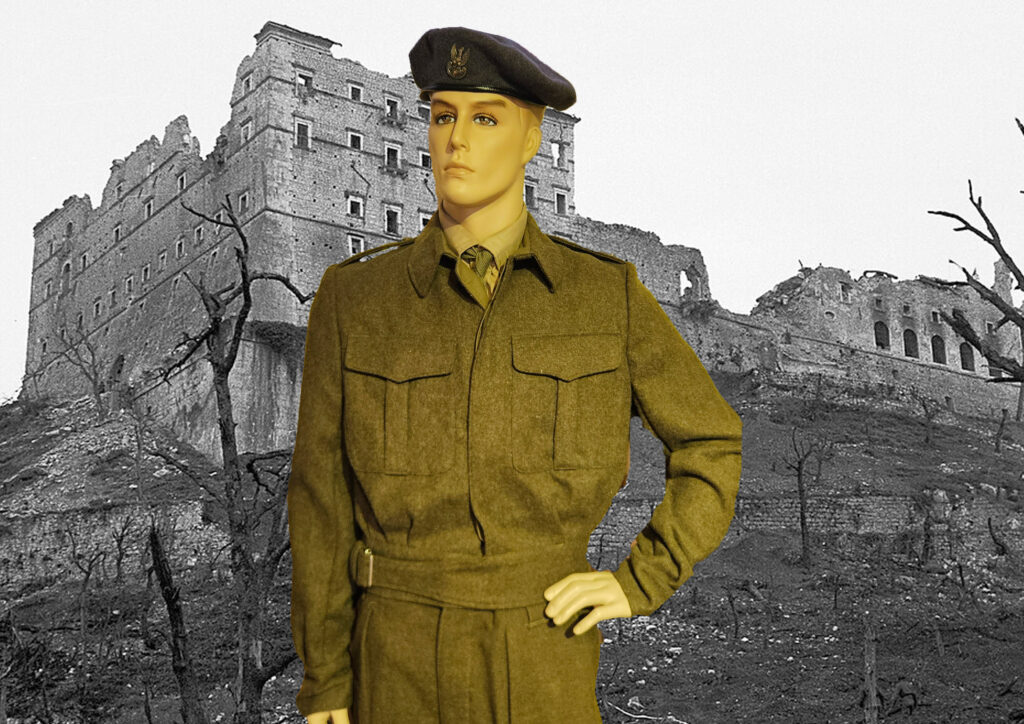
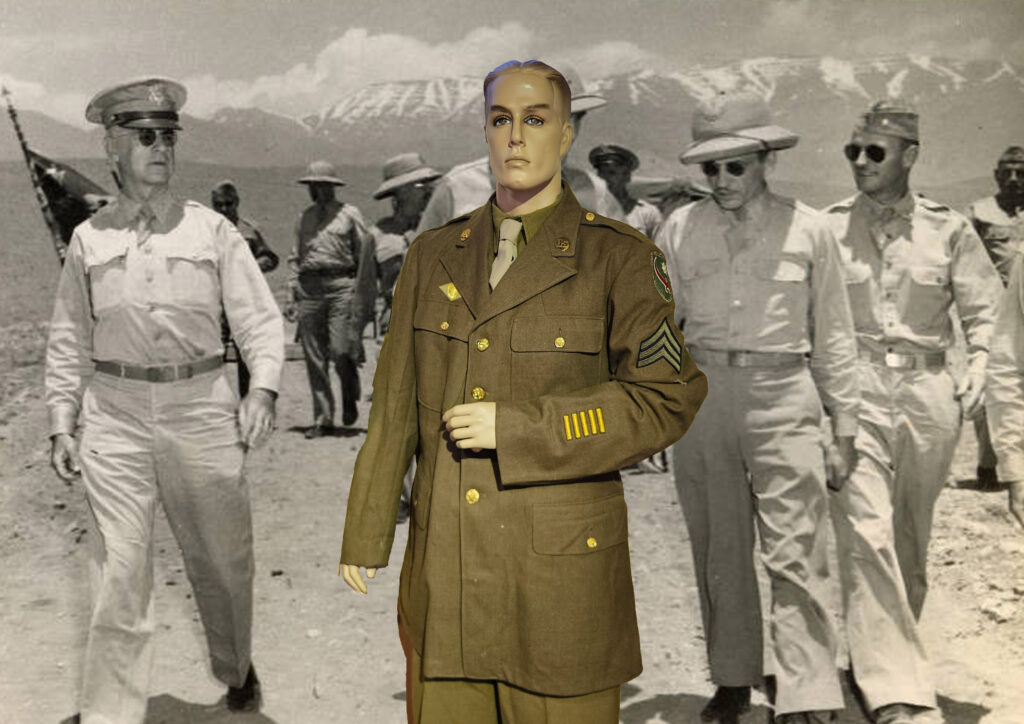
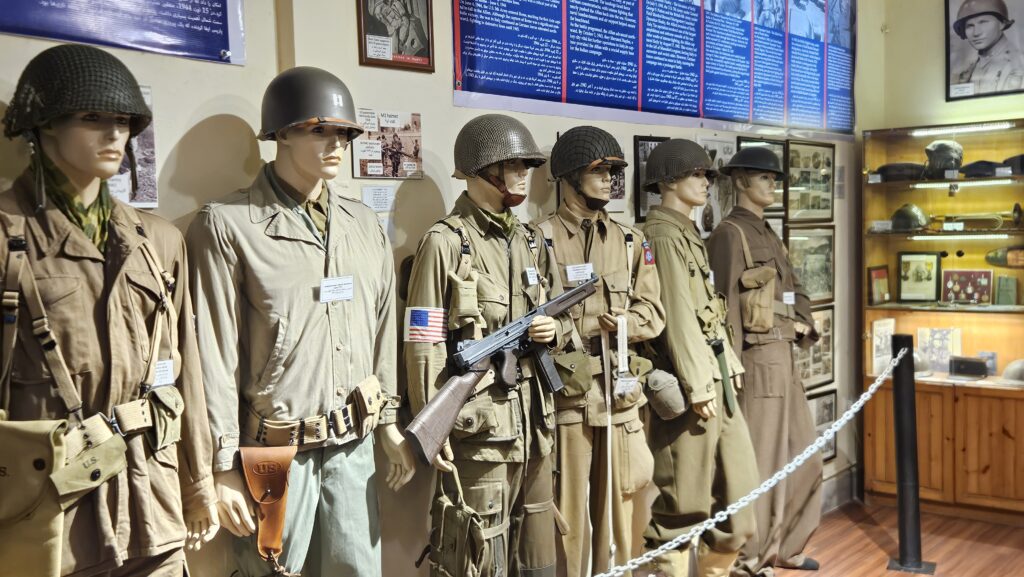
Left to right: Iranian Army Infantry August 1941, Iranian soldier in the new unified military force 1930s, Polish 2nd Corps Monte Casssino 1944, US Army Persian Gulf Command Sergeant with an A-class uniform.
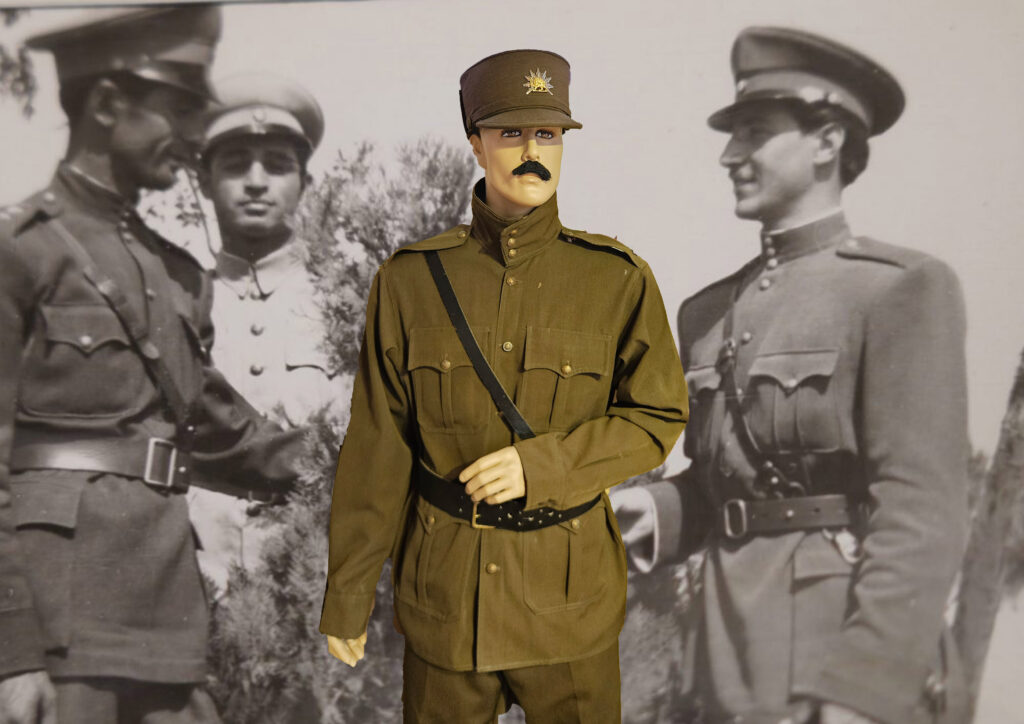
The new unified military force 1930s
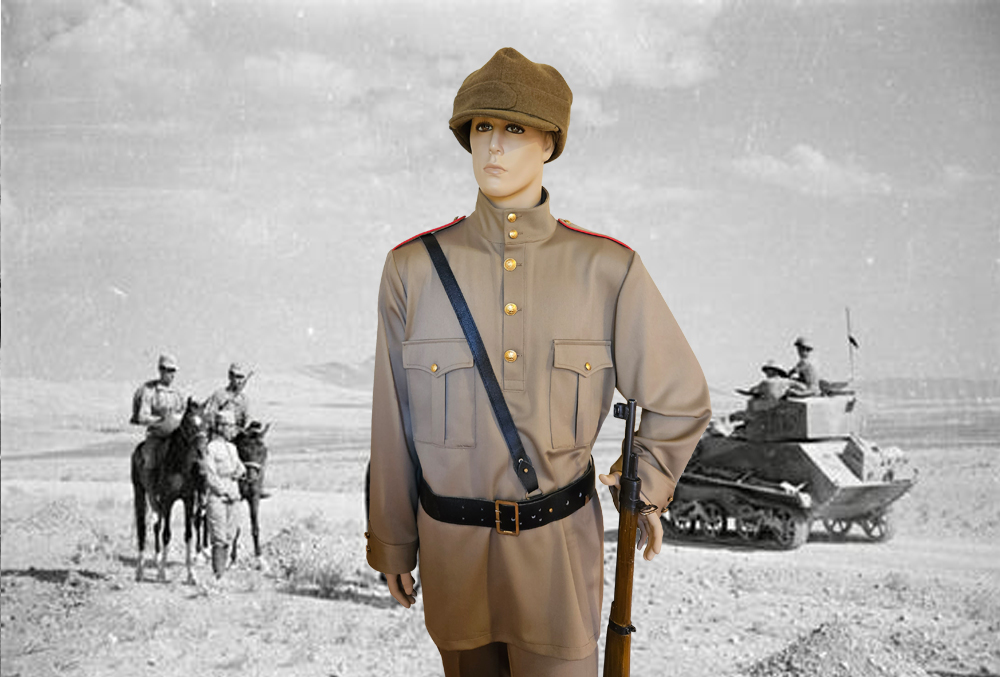
Iranian soldier August 1941.
During the Anglo-Soviet invasion of Iran in August 1941 the Iranian high command gave the order that all soldiers, sailors, and airmen were to not resist to avoid further casualties, before issuing the order little resistance was faced by the Anglo-Soviet forces mostly by the Iranian Imperial navy and some Iranian border guards.
Polish Soldiers from The Polish II Corps AKA The Anders Army, that went through Iran and were reorganized for the Italian Campaign of WW2.
US Army Sergeant in The Persia Gulf Command in Iran WW2 with an A-class coat.
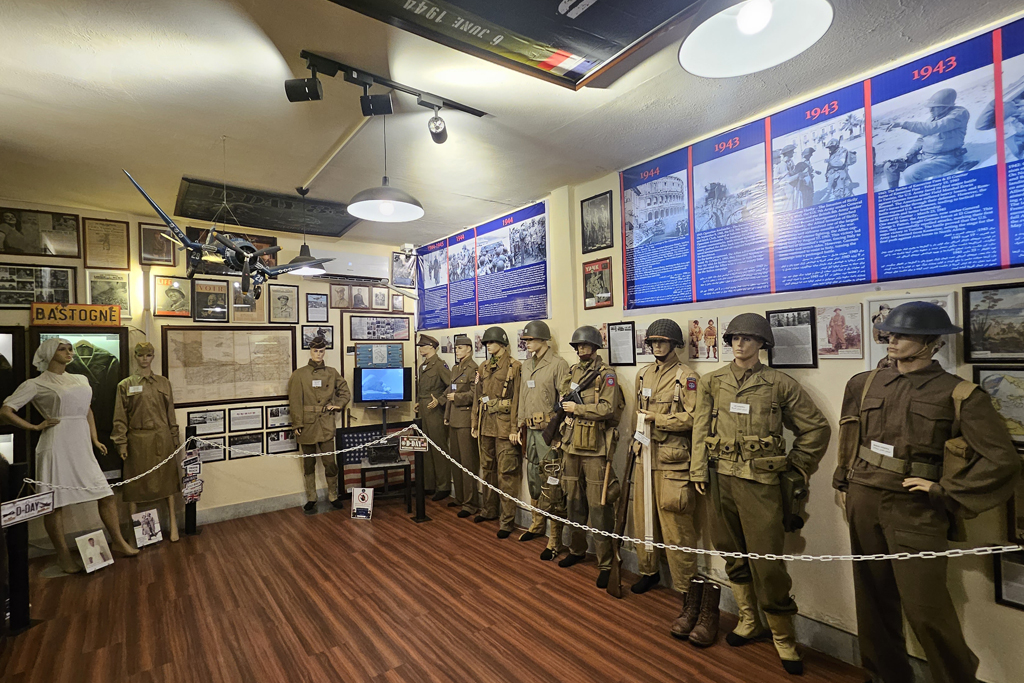
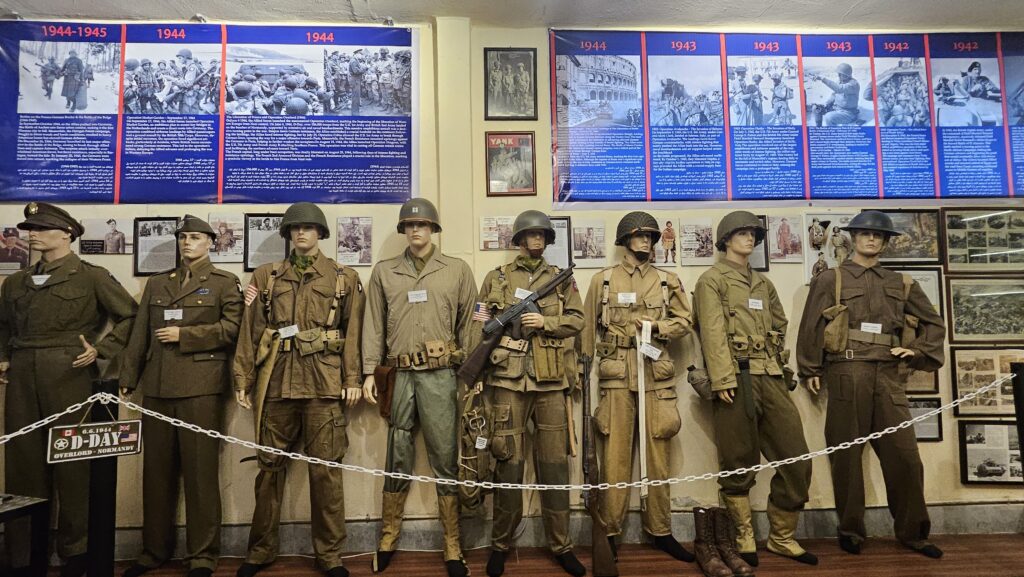
The Western Allies room of the museum reflects the result of The Tehran conference which was The Allied Invasion of Normandy on June 6th 1944.
US Army Sergeant in The Persia Gulf Command in Iran WW2 with an A-class coat.
The Western Allies room is also the only place in Iran where The history of WW2 from the western perspective is depicted by uniforms, photos, maps and original items.
The Eastern front room shows the other side of the war where the Soviet Red army fought the Germans. The role of Iran was a connecting force that connected The West to The East.
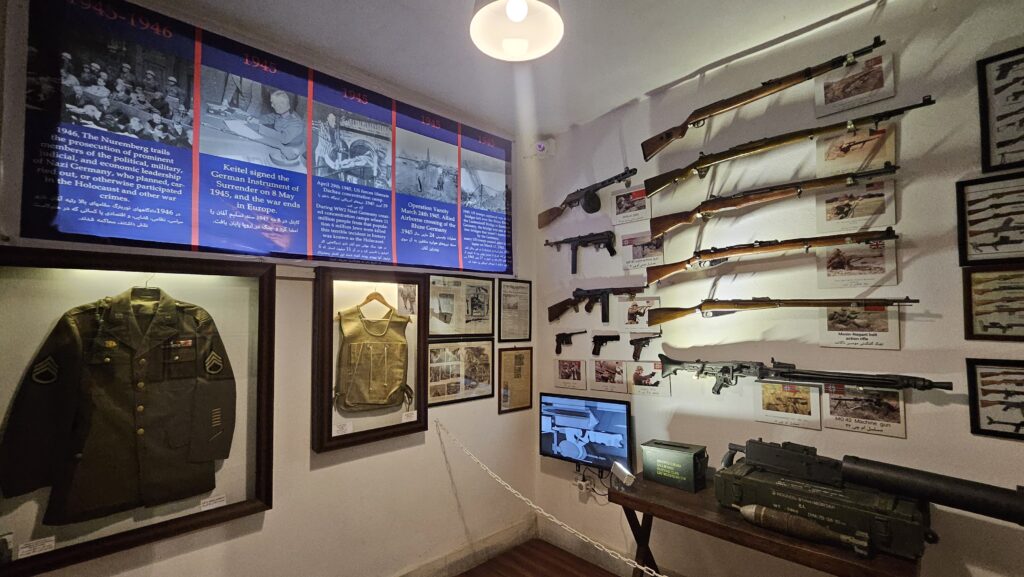
As a private museum, we uphold strict adherence to gun laws, which may prevent us from exhibiting real firearms. Nevertheless, through years of dedicated effort, we have amassed an impressive collection of replicas that vividly depict the weaponry used during World War II. Our gun room showcases a diverse array of firearms, ranging from iconic submachine guns like the M1A1 Thompson and MP40 to renowned handguns such as the Colt 1911 and Luger P08. Additionally, visitors can marvel at the innovative designs of semi-automatic pistols like the Mauser C96 and witness the precision engineering of bolt-action rifles like the Kar98 and Lee Enfield. Our collection also features significant rifles like the Vz24, M1 Garand, and Mosin Nagant, each contributing to the arsenal of soldiers on the battlefield. Moreover, enthusiasts can explore the evolution of machine guns with replicas of the MG42 and MG08, marveling at their firepower and impact on combat tactics. Alongside these remarkable firearms, our gun room is adorned with an array of propaganda posters from the 1940s, offering a glimpse into the wartime propaganda efforts that shaped public perception. With meticulous attention to detail, our displays immerse visitors in the weaponry and propaganda of the World War II era, providing a unique educational experience within our museum.